

I was standing in the center of a historic ballroom, surrounded by four hundred executives in black-tie attire, when I realized I had made a massive mistake. I’d sold the client on a ‘revolutionary’ indoor drone shot to capture their entire global team in one frame. As the rotors spun up, the sound wasn’t a futuristic hum; it was a deafening roar that sounded like a leaf blower in a library. Within seconds, the downwash from the blades sent the meticulously placed linen napkins flying off the tables, and the CEO’s face went from curious to concerned. It was a chaotic mess that taught me everything I need to know about the reality of indoor aerial photography. If you’re thinking about skipping the ladder and launching a drone at your next gala, we need to talk about what actually happens when those blades start spinning.
Your Ceiling is Much Lower Than it Looks
When you are standing in an empty hall during a venue walkthrough, the space feels infinite. Add four hundred people, a stage, and lighting rigs, and that space shrinks fast. I’ve seen drones get caught in the magnetic interference of steel beams, causing them to drift dangerously close to guests. It’s not just about the height; it’s about the air. In an enclosed space, drones create ‘prop wash’—a turbulent air current that can knock over light-weight decor or make a beautifully styled buffet look like a windstorm hit it.
Is a Flying Camera Actually Worth the Stress?
Most people assume a drone is the only way to get that ‘hero shot’ of the whole company, but they forget the sensory cost. Small consumer drones can produce noise levels between 70 and 80 decibels, which is roughly equivalent to running a vacuum cleaner right next to your guests. Have you ever tried to maintain a professional atmosphere while a mechanical hornet buzzes overhead? It’s tough. Beyond the noise, there is the ‘look up’ factor. Instead of natural, smiling faces, you often get 400 people squinting in fear or confusion at a hovering robot. Early in my career, I ignored the three-foot safety buffer rule, thinking I could navigate a small drone through a tight seating chart. I ended up clipping a floral centerpiece and learned the hard way that ‘compact’ doesn’t mean ‘safe.’
Why Traditional Methods Still Win the Day
We often overlook the fact that a high-quality wide-angle lens on a tripod—or even a sturdy ladder—is more reliable than a battery-powered aircraft. According to the Federal Aviation Administration (FAA), flying drones over people is strictly regulated, and while indoor flight technically falls outside their ‘navigable airspace’ jurisdiction, the liability remains massive if a guest gets nicked by a propeller. You also have to consider the lighting. Most ballrooms are notoriously dimly lit, and drone sensors are notoriously small. This leads to grainy, noisy photos that don’t look half as good as what a ground-based pro could do with a silent shutter strategy. Have you ever had a tech ‘innovation’ nearly derail your event schedule? I’d love to hear your horror stories. Today, we’re going to break down how to get that perfect group shot without risking a lawsuit or a ruined dinner service.
Clear the Landing Zone Before the First Course Arrives
If you want that grand wide-angle shot, you have to treat the ballroom like a flight deck, not a playground. The first step is mapping your flight path during the essential checklist for successful corporate event catering phase. I once tried to ‘wing it’ at a tech summit in Seattle. I thought I could fly over the empty buffet line during the keynote. What I didn’t account for was the heat rising from the chafing dishes, which created a pocket of warm air that made the drone bob like a cork in a bathtub. Now, I mark ‘No-Fly Zones’ on the floor plan with gaffer tape before the doors even open. You need a dedicated spot for takeoff that is away from the main traffic flow of the servers and the bar.
Tell the Service Team Exactly Where You Will Be
The biggest danger in an indoor flight isn’t the ceiling; it’s a six-foot-tall server carrying a heavy tray of entrees. In a crowded room, their focus is on the floor and the guests, not the mechanical hornet hovering at eye level. This is why ensuring your server lead needs a copy of the event script is non-negotiable. At a gala last winter, I saw a drone pilot nearly take out a captain during the main course service because he hadn’t checked the kitchen exit path. Synchronizing your launch with the moments guests are seated for speeches is the only way to ensure the aisles stay clear. 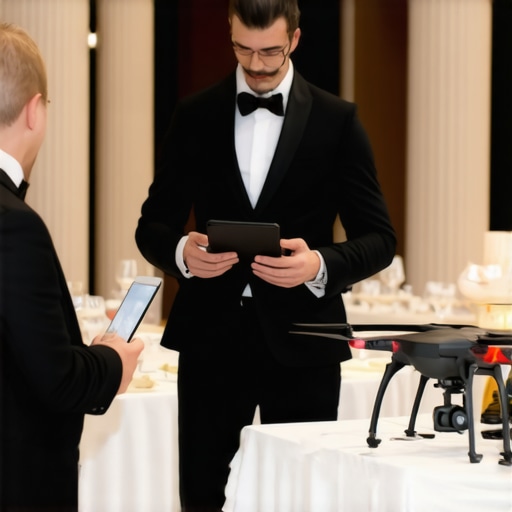
Time Your Flight to the Event Flow
Never launch when people are moving. The best window is the ‘golden five minutes’ after the first course is cleared but before the main is served. This is when the room is most static. You can coordinate this with the catering manager to learn how to keep your event schedule on track without rushing guests. If you miss that window, wait for the toasts. The goal is to minimize the variables. A moving target is a dangerous target, especially when that target is a VIP with a glass of expensive wine. Think of the drone as a stage performer; it needs a specific cue to enter and exit.
Crank Up the ISO or Pack the Gear Away
Most ballrooms are lighting nightmares for small drone sensors. If you aren’t prepared to deal with grainy shadows, you shouldn’t be in the air. You need to verify if the best way to light a buffet line for evening events includes any overhead spots you can hijack for your shot. I’ve learned that understanding why your photographers need a high-speed memory card strategy is vital because you’ll be firing off massive bursts of photos to find the one frame that isn’t blurry from the drone’s vibrations. If the light is too low, don’t force it. A bad, noisy drone shot is worse than no shot at all. Sometimes, the most professional move you can make is keeping the drone in the bag and sticking to a ground-based wide angle.
Most event planners think that if a VIP gala feels sluggish, the solution is simply to hire more staff. In reality, over-staffing without a clear hierarchy creates a ‘human traffic jam’ that is just as disruptive as my drone disaster. You have to realize that effective catering strategies for corporate event impressiveness aren’t about headcounts; they are about communication flows. Research from the Cornell School of Hotel Administration suggests that service quality drops significantly when the ‘span of control’ exceeds six to eight subordinates per supervisor in high-pressure environments. This is why why your server team needs a designated captain for every 50 guests is the most frequently ignored rule in high-end catering. When everyone is in charge, nobody is in charge, and that’s when the soup arrives cold.
Is your server-to-guest ratio actually hurting your event?
If you have too many people on the floor, you’ve essentially built an obstacle course. I’ve seen planners insist on a 1:10 ratio for a seated dinner, only to find that the servers were constantly bumping into one another because the impact of floor length linens on server safety wasn’t considered in the tight floor plan. You need to know how to choose the right staffing ratio for a VIP event based on the physical constraints of the room and the menu complexity, not just a number on a spreadsheet.
The Logistical Trap You Never Saw Coming
Another common ‘trap’ is the placement of the bar. It’s tempting to shove it into the back of the room to save space for the stage, but the common mistake of placing the bar in a back corner creates a bottleneck that kills the room’s energy before the first toast is even made. 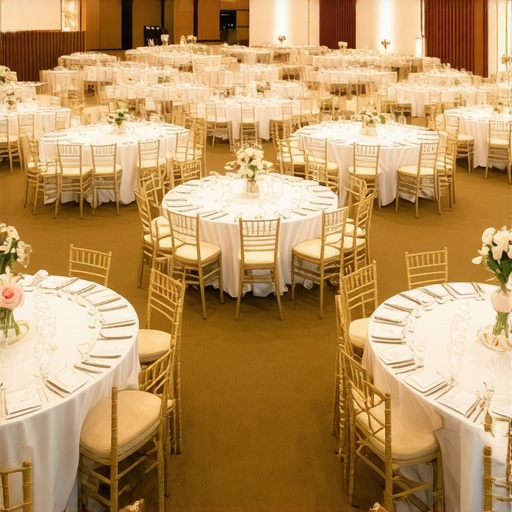 We focus so much on the visual spectacle—like my ill-fated drone shot—that we forget the physical movement of the night. Have you ever fallen into this trap of prioritizing decor over the actual flow of service? Let me know in the comments. Finally, stop treating your service team like background noise. The best top server tips to elevate your event experience involve integrating the staff into the event’s ‘vibe.’ If they look stressed because they haven’t seen the script, your guests will feel that tension. True expertise isn’t just about avoiding a drone crash; it’s about mastering the silent choreography that happens under the lights.
Get the Right Communication Gear or Get Out of the Way
If there is one thing that separates the amateurs from the pros in a high-stakes ballroom, it is the silence. You shouldn’t hear the coordinator shouting for more wine, and you certainly shouldn’t see servers wandering aimlessly. I personally swear by the Riedel Bolero wireless intercom system. It is expensive, yes, but when you are managing a 400-person plated dinner in a tent, the ability to have clear, multi-channel communication without interference is what keeps the engine running. This level of coordination is the backbone of mastering corporate event planning secrets to seamless success. Most people rely on cheap walkie-talkies that crackle and die, but a professional-grade comms system allows the lead server to whisper a timing change to the kitchen without the guests ever noticing a ripple in the service.
Stop Relying on Paper for Your Headcounts
We’ve all seen the frazzled planner clutching a soggy clipboard. In 2025, that is a recipe for disaster. I transitioned my entire team to real-time digital seating charts that sync across tablets. When a guest with a severe nut allergy arrives at Table 12, the kitchen knows instantly. This is a massive part of optimizing server efficiency to enhance event satisfaction because it removes the ‘telephone game’ of verbal instructions. By using platforms like Planning Pod or Social Tables, you create a single source of truth. If you’re still using a printed spreadsheet, you are one spilled glass of water away from losing your entire essential checklist for successful corporate event catering. Digital sync ensures that every captain is looking at the same version of the floor plan, which is vital when you are juggling complex dietary needs and VIP movements simultaneously.
How do I keep my event standards high for the long haul?
Maintenance of standards isn’t about a one-time training session; it’s about the ‘pre-shift’ culture. I hold a fifteen-minute stand-up meeting before every single event, no matter how small. We go over the ‘vibe’ of the client, the specific corporate event catering strategies for success we’re deploying that night, and any potential bottlenecks we identified during the walkthrough. Consistency comes from repetition and the refusal to let small details slide. I tell my team that if a fork is a quarter-inch out of alignment, the guest might not see it, but they will feel the lack of precision. This relentless focus on the micro-details is what transforms a standard meal into an elite experience.
The Dante Protocol and the Future of Event Tech
Looking ahead, the integration of AV and catering is only going to get tighter. We are already seeing the Dante protocol (Digital Audio Network Through Ethernet) become the standard for uncompressed, low-latency audio across massive venues. This means your lead server can receive audio cues directly from the stage manager’s board to time the ‘grand reveal’ of a dessert course to the exact second a keynote ends. My prediction? Within the next three years, we will see AI-driven ‘heat mapping’ in ballrooms to predict guest movement. This will allow us to shift server positions in real-time before a bottleneck even forms at the bar. If you want to stay ahead of the curve, I challenge you to try this: for your next event, ditch the paper BEO and run the entire floor through a shared digital workspace. You’ll never go back to the clipboard.
Hard Truths About Ballroom Logistics Most Planners Ignore
After a decade under the crystal chandeliers, I’ve realized that the most impressive ‘tech’ isn’t a drone—it is the invisible net of communication you cast over the room. I spent years chasing the ‘wow factor’ of aerial shots only to realize that a guest who has to wait for their wine because a server was dodging a rotor is a guest who isn’t impressed. True success comes from corporate event catering strategies for success that prioritize the human experience over the mechanical one. Reflecting on my own mistakes, I’ve found that the best photos come from people who feel safe and attended to, not from those looking up in fear of a buzzing prop.
- Respect the air space: Your guests’ physical comfort is your primary metric of success, not your Instagram reel.
- Reliable comms win: A whisper-quiet wireless headset is more valuable than a 4K camera on a gimbal.
- Digital is your insurance: Real-time sync ensures your optimizing server efficiency to enhance event satisfaction plan stays accurate even when the VIP list changes mid-dinner.
The High-Stakes Toolkit I Carry to Every Gala
If you want to move beyond the clipboard and the chaos, you need a specific set of tools that handle the pressure of 400+ guests. I personally rely on Planning Pod for real-time floor plan adjustments, ensuring my ultimate guide to corporate event catering logistics remains dynamic and accessible to the whole team. For communication, nothing beats the Riedel Bolero system; its ability to cut through the heavy Wi-Fi interference of a modern ballroom is why it is used in professional stadium environments. I also never step on-site without Gaffer tape for floor marking and a high-capacity portable battery—because in a ballroom, the nearest outlet is always forty feet away from where you actually need it. These tools aren’t just about efficiency; they give you the mental bandwidth to handle real emergencies when they arise.
Build Your Next Event With Quiet Confidence
Stepping away from the ‘spectacle’ and focusing on the precision of service is a transition every elite planner eventually makes. Whether you are coordinating a massive tech summit or a delicate wedding, remember that the most memorable events are the ones that feel effortless and organic. Don’t be afraid to leave the drone in the bag and focus on mastering corporate event planning secrets to seamless success through better staffing ratios and tighter technical coordination. You have the tools and the insights to create something truly seamless where the food is hot, the wine is cold, and the technology is felt but never seen. The goal is a room that hums with energy, not with drone blades. What was the one ‘innovative’ event tech choice you made that actually caused more stress than it solved? Let me know in the comments below.