

I was standing right in the middle of a stunning $10,000 sailcloth tent, watching a world-class 10-piece band pour their hearts out, but all I could hear was a muddy, low-end thump that felt more like a headache than a celebration. It was heartbreaking. These musicians were incredible, yet the acoustic environment was working against them like a physical wall. If you’ve ever felt that frustrating disconnect between the visual beauty of a tented reception and the actual quality of the music, you aren’t alone. It is a specific kind of disappointment when the party you planned feels like it’s being heard through a thick wool blanket.
Stop the Muddy Sound Before the First Dance
The reality is that tents are acoustic nightmares by design. You’re essentially trapped inside a giant plastic or canvas bubble that reflects low-end frequencies while swallowing the crisp highs that give music its life. Early in my career, I made the amateur mistake of thinking a more powerful amplifier would solve the problem—it didn’t; it just made the ‘mud’ louder and more abrasive. Today, I’m going to show you exactly how to break through that sonic fog so your guests can actually hear the lyrics and feel the energy. We will look at how to treat the space without ruining the aesthetic.
Is it even possible to get concert-quality sound in a temporary structure?
Many couples worry that they have to choose between the aesthetic of an outdoor gala and high-fidelity sound. You don’t. But you do have to stop treating the tent like a ballroom. When you’re managing the logistics of a 400-person plated dinner in a tent, the sound is often the last thing on the checklist, which is a recipe for a muffled disaster. According to technical documentation from the Audio Engineering Society, non-parallel surfaces and soft, thin materials like vinyl can drastically alter frequency response, often absorbing the 2kHz to 5kHz range where human speech and vocal clarity live, while allowing bass to build up in the corners. [image_placeholder] Have you ever been to a wedding where you couldn’t understand a single word of the toasts? It usually happens because the planner didn’t account for how the fabric interacts with the speakers. It’s the same reason why you should never skimp on the acoustics for outdoor ceremonies; without the right setup, your investment in a live band is essentially wasted. If you find yourself in a situation where the venue isn’t helping, remember that why your venue manager should not be your day-of coordinator often comes down to their lack of specialized technical knowledge regarding sound diffusion and equipment placement.
The Hidden Battle Between Canvas and Bass
The biggest culprit for that ‘underwater’ sound is the lack of hard, reflective surfaces for high frequencies to bounce off of. In a standard ballroom, sound reflects off walls and ceilings in a way that creates a ‘bright’ atmosphere. In a tent, the sound waves just die or get trapped. This is particularly bad if you have a wooden dance floor laid directly over grass without any sub-flooring to absorb the boominess. I’ve seen bands try to compensate by turning up the volume, which only makes the reverb worse. Instead, we need to focus on diffusion and strategic speaker placement to ensure the sound reaches your guests’ ears directly rather than bouncing off the ceiling first.
Stop Blasting the Front Row and Start Using Delay Stacks
Think of sound like a garden hose. If you want to water the plant at the very back of the yard, you don’t just turn the pressure up until the plants in the front are shredded; you use a longer hose or a second sprinkler. In a tent, volume is the enemy of clarity. Instead of two massive speakers at the stage, we use delay stacks—smaller speakers placed halfway down the tent. This allows the sound to remain at a conversational level near the dance floor while ensuring guests in the back can actually hear the speeches. This is similar to the logistics of moving a 10-piece band onto a small stage; it’s about smart distribution, not brute force. 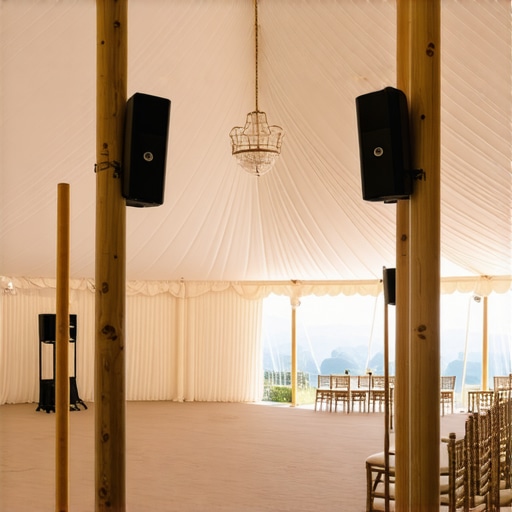
Kill the Echo with Strategic Soft Goods
Tents lack the natural diffusion of a furnished room. High-frequency sounds hit the vinyl and bounce back like a ping-pong ball. To fix this, you need to introduce acoustic sponges. This means heavy draping on the poles and, most importantly, carpeting. If your budget allows, a full-floor carpet over a sub-floor will do more for your sound quality than a $5,000 speaker upgrade ever could. I’ve seen planners successfully learn how to mask echo in a high-ceiling industrial wedding venue, and the principles here are the same: break up the flat surfaces to stop the slap-back echo.
Cut the Mud at the Source
The muddy sound usually lives in the 200Hz to 500Hz range. This is where the bass guitar and the low-end of a male voice get tangled. Ask your sound engineer to scoop these frequencies out. By thinning out that middle-bottom layer, the crisp highs of the snare drum and the clear vowels of the toasts can shine through. If you are doing a corporate event, you also need to figure out how to keep the kitchen noise from ruining your keynote speech, as that clatter often lives in the same frequency range that kills vocal clarity.
The Night the Drum Kit Almost Ruined the First Dance
I once managed a wedding in a sailcloth tent where the drummer was set up directly on a hollow wooden riser. Every time he hit the kick drum, the entire floor vibrated like a giant speaker cabinet, making the audio sound like a thunderstorm. We had ten minutes before the grand entrance. I grabbed three thick wool rugs from the lounge area and stuffed them under the drum kit and inside the riser. It didn’t look perfect under the kit, but the muddiness vanished instantly. Sometimes, the fix is as simple as a physical barrier. If you’re working with a tight footprint, the logic of choosing a DJ over a live band for small spaces often comes down to these exact physical limitations—smaller gear equals fewer acoustic headaches.
Your Videographer Needs a Direct Feed
No matter how good it sounds in the room, never let your videographer record the toasts using the microphone on their camera. The tent’s reverb will make the recording sound like it was filmed in a cave. This is why your videographer needs a soundboard patch for the toasts. They need the clean signal directly from the mixer before it ever hits the air and bounces off the canvas.
Beyond the speakers and the canvas, there is a nuance that even seasoned planners often miss: the human element of acoustic management. You can have the most expensive line-array system in the world, but if your service team isn’t synchronized, the ambient noise will drown out the magic. I have seen it a hundred times—everyone focuses on the band’s rider but ignores how the layout of the bar and the movement of servers impact the room’s energy. High-fidelity sound requires a controlled environment, and humans are the most unpredictable acoustic variables.
The Expensive Equipment Myth is Costing You Clarity
The most common mistake is thinking a high price tag guarantees high-end performance. In reality, expensive gear in a poorly managed room just amplifies the chaos. You need to know how to spot a fake luxury server team before they ruin your gala. If your crew lacks a specific hierarchy, the dinner service will feel like a disorganized rush rather than a choreographed performance. This is why your server team needs a clear chain of command on site to handle the inevitable chaos of a large-scale event without creating unnecessary clatter. A fascinating study published by the Acoustical Society of America details the ‘Lombard Effect,’ which is the involuntary tendency for speakers to increase their vocal intensity when background noise levels rise. In a tented reception, this creates a ‘noise spiral’ where guests shout to be heard over each other, eventually overpowering the sound system entirely.
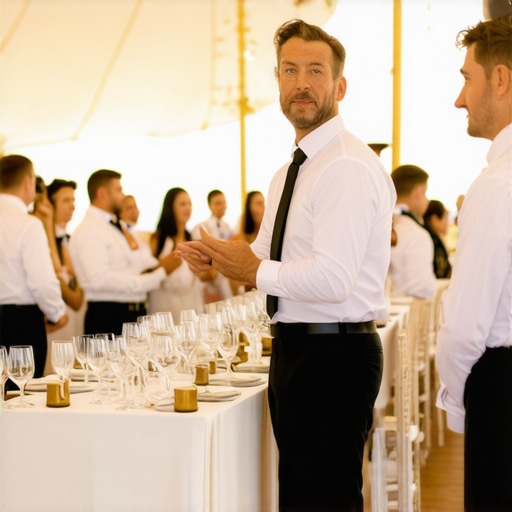
Can you actually silence the roar of a five-hundred-person crowd?
The answer isn’t ‘more volume.’ It is about crowd control through layout. Use the logic of placing the bar as far from the entrance as possible to disperse the density of the noise. When people congregate in one spot, the Lombard Effect takes over. By spreading out the ‘energy zones’—the bar, the photo booth, and the lounge—you naturally lower the ambient decibel level, allowing your speeches to cut through the air without the sound engineer having to red-line the mixer. This is where how to layout a corporate ballroom for maximum networking principles can actually save your wedding’s acoustic integrity.
The High Cost of Amateur Service Teams
Beware of the ‘budget staffing’ trap. While it is tempting to save on labor, the hidden risks of hiring student servers for high-end events include more than just slow service; it is the lack of situational awareness. A professional knows how to spot a professional server in an interview based on their understanding of ‘silent service’—the ability to clear plates during a keynote without making a sound. If your team hasn’t been briefed, you will hear the clinking of silverware right in the middle of your CEO’s most poignant point. Always ensure why your server team needs a designated captain for every 50 guests to maintain that level of discipline and keep the kitchen noise from bleeding into the guest area. Have you ever fallen into this trap? Let me know in the comments.
The Professional Gear I Never Walk On-Site Without
To truly conquer the acoustic chaos of a tent, you need more than just good ears; you need data. I personally never run a high-stakes event without a Real-Time Analyzer (RTA). Specifically, I use Rational Acoustics Smaart software paired with a calibrated measurement microphone. This allows me to see exactly where the frequencies are ‘stacking’ in the vinyl corners. If you see your sound engineer just twisting knobs by feel, they are guessing. A professional maps the room. This technical precision is just as vital as the hidden risks of using wireless microphones near heavy wi-fi usage, where interference can ruin a speech just as easily as an echo can.
How do I keep the sound crystal clear as the room gets crowded?
Sound behaves differently when a tent is empty versus when it is filled with four hundred warm bodies. Human beings are excellent sound absorbers, but they also generate heat and humidity, which actually changes the speed of sound. According to technical white papers from Meyer Sound regarding M-Noise and linear peak SPL, atmospheric conditions can cause high-frequency attenuation over distance. I combat this by ‘re-tuning’ the system ten minutes after dinner service begins. This ensures that the crispness you heard during the soundcheck doesn’t turn into a dull thud once the party is in full swing. This level of attention to detail is a hallmark of mastering corporate event planning secrets to seamless success.
Why AI is the next big thing for outdoor acoustics
I predict that within the next three years, we will see a massive shift toward AI-driven beamforming speakers in the rental market. These systems use algorithms to ‘shape’ the sound coverage in real-time, effectively steering the audio away from the reflective tent walls and directly onto the guests. It’s the same forward-thinking approach found in wedding catering tips from industry experts who are already using tech to streamline service. We are moving away from ‘big speakers’ and toward ‘smart speakers’ that understand the geometry of the space they are in.
Balance Your Technical Rig with a Disciplined Team
You can have a million-dollar sound system, but if your service staff is clinking glasses or shouting orders near the stage, the technical effort is wasted. This is why I emphasize top server tips to elevate your event experience, which include the ‘silent sweep’ method during speeches. A synchronized team knows that their physical movement and noise level are part of the room’s overall acoustic profile. If you want to elevate your next gala, ask your sound provider for a ‘system optimization report’ before the doors open. If they can’t provide one, they aren’t managing your sound—they’re just playing it loud.
Lessons Learned When the Music Almost Died
Over the years, I have realized that the most expensive audio rig in the world cannot fix a fundamentally broken floor plan. One of my biggest lightbulb moments happened during a massive gala where the sound was perfect at 4 PM but became a garbled mess by 8 PM. I learned that as the temperature rises and the humidity from the dance floor increases, the speed of sound shifts just enough to throw off the timing of the delay stacks. Now, I always insist on a ‘mid-event recalibration’ to account for the physical presence of the crowd. Implementing top server tips to elevate your event experience means ensuring the team knows when to freeze during a speech, as even the clinking of a single tray of champagne flutes can create a frequency spike that ruins a recording.
Another hard-won lesson involves the floor itself. If you are building a stage on grass, the sub-bass will simply disappear into the earth, leading your band to crank the volume to compensate. I always recommend a heavy plywood sub-floor under the stage to reflect that energy back into the room. This level of foresight is a key part of the ultimate guide to corporate event catering logistics, where we treat the physical environment as an active participant in the success of the evening. #IMAGE_PLACEHOLDER_FINAL#
The Essential Toolbox for Pro-Level Audio
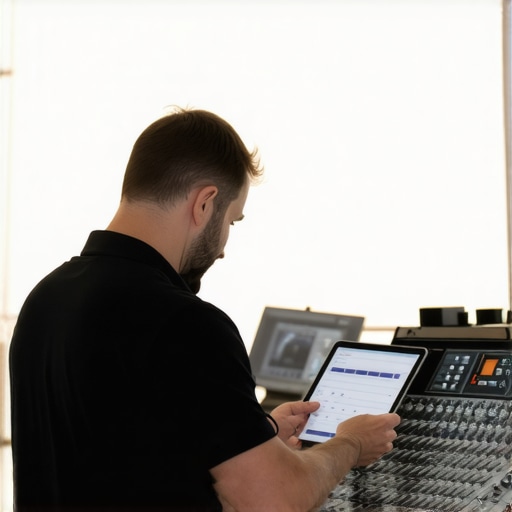
If you want to move beyond guesswork, you need to rely on the same tools the touring professionals use. I personally trust Rational Acoustics Smaart for real-time analysis; it turns sound into a visual map that anyone can understand. For the hardware, I never settle for anything less than a digital mixing console with a tablet interface, allowing the engineer to walk the tent and hear exactly what the guests are hearing at table 42 versus the dance floor. I also swear by cardioid subwoofers, which are designed to project bass forward while cancelling it out behind the speaker, preventing the stage from becoming a vibrating mess. For those interested in the broader perspective of high-end service, I often point people toward The Event Manager’s Bible or the latest AES technical papers on temporary structures. These resources, combined with wedding catering tips from industry experts, ensure that every sensory detail is accounted for.
Bringing it All Together for Your Big Day
Creating a world-class sonic experience in a tented reception is an art form that requires patience, technical skill, and a refusal to settle for ‘good enough.’ When you stop fighting the canvas and start working with the physics of the space, the results are nothing short of transformative. You aren’t just playing music; you are creating an environment where memories are heard clearly. If you are feeling overwhelmed by the technical demands of your next gala, don’t hesitate to reach out and contact us for expert guidance on streamlining your event. High-fidelity sound is within your reach, provided you treat your tent like the concert hall it truly can be. Have you ever been to an outdoor event where the sound was so bad you couldn’t understand the toasts? Let me know your acoustic horror stories in the comments below!