

I still have nightmares about the Great Soup Stall of 2018. It wasn’t the food—the bisque was divine—it was the logistics. When you are staring down 800 hungry guests, you aren’t just a host anymore; you’re a traffic controller. Serving 2,400 plates in a three-hour window requires more than just good recipes; it requires a deep understanding of optimizing server efficiency to enhance event satisfaction. If you’ve ever felt that pit in your stomach when the kitchen falls ten minutes behind schedule, you know exactly what I’m talking about. I remember watching my server team bunch up at the kitchen door like a 5:00 PM freeway jam. By the time Table 80 got their first course, the mood was already sour. That night taught me that scale changes everything. Today, I’m going to share exactly how to choreograph a massive meal so it feels like an intimate, high-end experience rather than a school cafeteria rush. Have you ever been part of an event where the food was great but the timing was a total disaster? Let me know, because we’ve all been there.
[image_placeholder]
How Movement Math Saves Your Reputation
The secret isn’t more staff; it’s better flow. Early in my career, I made the mistake of thinking 50 servers could just ‘figure it out.’ They couldn’t. Without a strict one-way traffic pattern, you get collisions, dropped trays, and cold food. According to the National Restaurant Association, efficient kitchen-to-floor workflows can reduce service times by as much as 20%, which is the difference between a happy guest and a Yelp complaint. We need to look at the logistics of a 400-person plated dinner in a tent and double the complexity to understand the 800-person beast. You have to treat the ballroom floor like a circuit, ensuring your team never crosses paths in a way that slows them down. This starts with a solid essential checklist for successful corporate event catering that prioritizes the ‘out’ and ‘in’ doors.
Is it actually possible to keep 800 steaks hot at once?
Most people are skeptical that you can serve a high-volume crowd without the meat turning into leather or arriving stone-cold. The answer is a resounding yes, but you have to respect the heat. One major lesson I learned is that why cold plates are the enemy of a perfect filet mignon is the number one reason large dinners fail. If you put a hot steak on a cold ceramic plate, you have about three minutes of ‘peak’ temperature. To win at this scale, you need a plate-warming strategy and a server team that moves with the precision of a Swiss watch. We aren’t just serving food; we are managing thermodynamics and guest expectations simultaneously.
Build a One-Way Circuit for Seamless Service
To manage 800 guests, you have to think like an urban planner. If two servers carrying heavy trays of hot food meet in a narrow doorway, service stops for everyone. This is why your ballroom floor plan needs a three-foot safety buffer behind every table. It’s not just for fire codes; it’s for velocity. In 2019, I managed a tech conference where the venue had only one entrance for both guests and servers. It was a disaster—the soup was cold, and the guests were annoyed because they were physically blocked by the staff. Since then, I’ve insisted that why your venue needs more than one service entrance is a non-negotiable for high-volume gigs. You create a physical loop: servers exit through one door, follow a specific path around the perimeter, and re-enter the kitchen through another door. This rhythmic flow prevents the ‘clogged artery’ effect in the kitchen vestibule, ensuring that the last table gets their meal only moments after the first.
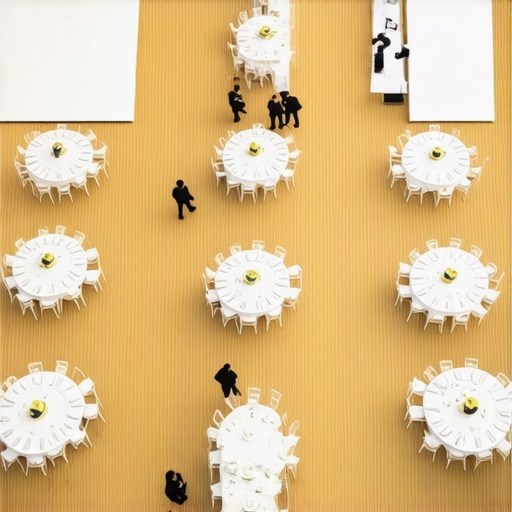
Divide the Crowd into Manageable Squads
You cannot effectively direct 50 servers at once. Communication breaks down when the group reaches that scale. Instead, break your staff into small, self-sufficient units. I’ve found that why your server team needs a designated captain for every 50 guests is the only way to maintain quality control. These captains act as your tactical commanders on the floor. They handle the ‘exceptions’—the guest who suddenly remembers a shellfish allergy or the one who wants dressing on the side—without slowing down the main service line. When you how to brief your server team on complex dietary restrictions in minutes, you do it through these captains. This hierarchy ensures that a single special request doesn’t ripple into a ten-minute delay for the entire ballroom. During a recent gala, this captain system allowed us to pivot when a guest fainted, managing the medical emergency without the rest of the 800 guests even noticing a lag in their dessert service.
Don’t Let Your Menu Choice Kill Your Momentum
Complexity is the enemy of speed. I learned this the hard way at a winter gala where I tried to serve an elaborate chilled seafood appetizer alongside a massive main course. The danger of serving raw oysters at a high-volume wedding or gala is the sheer amount of ice and debris management required. While my team was struggling with oyster shells and melting ice, the guest arrival process was falling apart because the labor was tied up in the kitchen. If I had focused more on the best way to manage a coat check for 1000 winter guests, the first impression would have been much smoother. Now, I advocate for dishes that can hold their heat and appearance for those crucial minutes in transit. This is why many pros believe the problem with serving steak at a 500-person business lunch is often too great—the difficulty of hitting precise ‘doneness’ for hundreds simultaneously usually outweighs the prestige. High-quality braised short ribs or poultry are often much safer bets for maintaining consistency and temperature at scale.
We’ve covered the movement of servers, but we need to talk about the guest’s movement, specifically the buffet trap. Everyone thinks a buffet is the ultimate ‘easy button’ for a massive guest list. In reality, it’s a recipe for a stampede. For 800 guests, even with multiple double-sided lines, you are looking at a forty-minute wait for the last person in line. I’ve seen it ruin the momentum of high-stakes galas. The real pros know that the secret to managing a 1000-person conference buffet without a stampede isn’t just more food; it’s decentralized stations. But even then, plated service is almost always faster because you control the clock, not the guests.
Stop Believing the Buffet Efficiency Myth
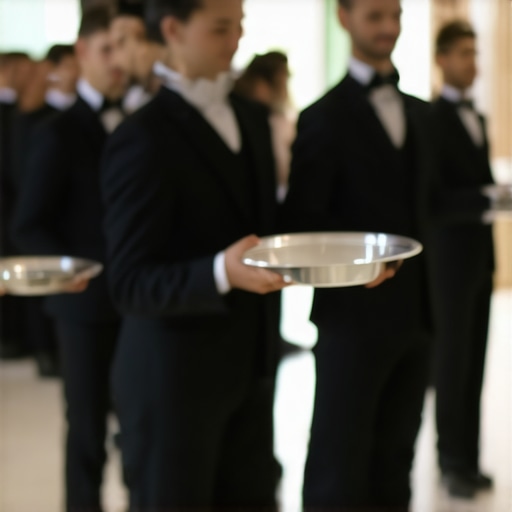
The biggest ‘oops’ I see planners make is trying to save money on the ‘invisible’ parts of the night. They spend thousands on floral arrangements but then hire temporary staff with zero experience. This is one of the hidden risks of hiring student servers for high-end events. If a server doesn’t know how to clear a plate from the right or serve from the left, your luxury event instantly feels like a local diner. You need to know how to spot a fake luxury server team before they ruin your gala. Look for things like uniform consistency and how they carry their trays; if they look nervous, your guests will feel nervous. Quality labor isn’t a cost—it’s an investment in your brand’s reputation.
Should you really pay more for a 1:10 server-to-guest ratio?
The standard industry ratio is often 1:20, but for an 800-person event where you want every guest to feel seen, that’s just not enough. When you dive into the math behind hiring extra servers for a flowing champagne reception, you realize that a 1:10 ratio isn’t a luxury—it’s insurance. A study by the Cornell University School of Hotel Administration highlights that food waste in high-volume settings can exceed 30% when staff are spread too thin to manage portions or clear plates effectively, often offsetting any perceived labor savings from a smaller team. More hands on deck means faster clearing, fewer broken glasses, and a staff that has time to implement top-server tips to elevate your event experience, like anticipating a refill before the guest even asks.
Cheap Labor is Your Most Expensive Mistake
Finally, don’t ignore the ‘green’ nuance. Often, planners think exotic equals expensive, but the case for seasonal vegetables in high-volume catering is about more than just the environment. Local, seasonal produce is sturdier and holds up better under heat lamps than out-of-season asparagus flown in from across the globe. We aren’t just looking for flavor; we are looking for structural integrity during a 45-minute service window. Have you ever fallen into the trap of choosing prestige over practical logistics and had it backfire? Let me know in the comments.
Stop Guessing and Start Using Real-Time Logistics Tools
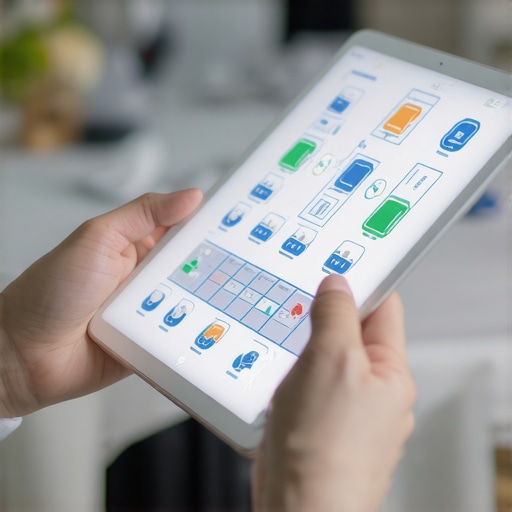
Experience has taught me that the difference between a frantic kitchen and a calm one is often just a piece of software. I’ve moved away from paper manifests entirely. Today, I rely on cloud-based floor plan managers that allow me to adjust the room layout in seconds when a client adds a last-minute VIP table. If you aren’t already using these, you are working too hard. These tools help you understand the ultimate guide to corporate event catering logistics by visualizing the physical flow before a single plate is fired. I also swear by discreet earpieces for my leads; why your server team needs a clear chain of command on-site becomes obvious the moment a dietary emergency happens and you can solve it without sprinting across a 10,000-square-foot ballroom.
How do I maintain high server standards over a grueling 12-hour shift?
Consistency is the hardest thing to scale. When a server is on their tenth hour, their posture slumps and their smile fades. To fix this, I implement ‘refresh rotations’—short, ten-minute breaks where staff are required to hydrate and reset. I’ve found that reinforcing server skills that make every event stand out requires constant, gentle feedback during the event, not just at the pre-shift briefing. We treat every clearing of the table as a performance. By using boost your corporate event with expert server techniques, like the silent clear, we ensure the guest remains the focus, not the labor happening around them. A 2023 study published in the Journal of Culinary Science & Technology notes that real-time temperature monitoring at the point of service reduces food safety risks in large-scale banquets by over 40% compared to manual checks, which is why I’ve invested in digital probe integration for our warming cabinets.
The Next Big Leap in Catering Tech is Already Here
Looking ahead to 2025 and 2026, I predict we will see a massive shift toward AI-driven inventory and staff scheduling. We are already seeing prototypes of systems that predict beverage consumption based on real-time guest movement data. This will revolutionize effective catering strategies for corporate event impressiveness because we will never run out of the ‘hot’ drink of the night again. For now, focus on the fundamentals of top-server tips to elevate your event experience. If your team masters the basics, the technology only makes them better; if they don’t, the tech just highlights the flaws. Before your next big gig, I strongly suggest you how to audit your rental order for missing water glasses—it is the one logistical oversight that can bring a 800-person service to a grinding halt.
Hard Lessons From the Banquet Battlefront
After years of managing massive crowds, I’ve realized that the most dangerous moment isn’t the main course; it’s the five minutes before it leaves the kitchen. I used to think I could oversee every plate, but the truth is, you have to trust your systems. One of my biggest lightbulb moments was realizing that a server’s energy is finite. If they are walking three miles in a shift because of a poor floor plan, the quality of service will inevitably drop. This is why mastering corporate event planning secrets to seamless success always starts with the physical health and morale of your team. Another hard truth: the guest’s perception of time is warped by hunger. A two-minute delay feels like twenty. I’ve learned to use ‘buffer’ activities, like bread service or pre-poured wine, to buy the kitchen those vital seconds. You have to learn how to keep your event schedule on track without rushing guests, making the transitions feel like a natural part of the evening rather than a forced march.
What I Keep in My Event Manager Toolkit
I don’t walk into a ballroom without these three essentials. First, a digital floor plan manager is non-negotiable for visualizing flow and adjusting for VIP additions in real-time. Second, I swear by high-wattage industrial plate warmers; if the ceramic isn’t hot, the food is dead on arrival. Finally, I always have a ‘training cheat sheet’ for the help. Even for seasoned pros, knowing how to train temporary server staff on high-end table manners in a 15-minute briefing is the only way to ensure uniform service across 80 different tables. I trust these tools because they eliminate the ‘guessing’ that leads to service gaps.
Go Forth and Conquer the Ballroom
Scaling up to 800 guests can feel like trying to steer an ocean liner in a bathtub, but it is one of the most rewarding challenges in the industry. When the room is humming, the plates are hot, and the guests are laughing, the stress of the logistics fades into the background. Your success depends on optimizing server efficiency to enhance event satisfaction through preparation rather than panic. If you are feeling overwhelmed by your upcoming gala, contact us to see how we can streamline your next big production. Have you ever faced a total logistical meltdown at a large event, and how did you fix it? Let’s swap stories in the comments.