

I remember standing in the back of a dimly lit ballroom three years ago, watching a row of high-powered executives look at their plates with a mixture of confusion and genuine sadness. I had made the rookie mistake of assuming a vegan option just meant taking the chicken off the plate and adding more steamed carrots. It was a disaster. The meat-eaters felt cheated, the vegans felt like an afterthought, and I felt like a failure as a host. That night, I realized that if you want to win over a room full of carnivores, you can’t just provide an alternative; you have to provide a masterpiece. Today, I am going to show you how to flip the script so your guests are actually asking for the plant-based recipe instead of hunting for the nearest burger joint after your event. We are going to dive into the art of satiety, the importance of texture, and why why your event needs a dedicated staff member for dietary requests to ensure no one feels like a second-class citizen at the dinner table.
Build Your Menu Around Texture and Salt Rather Than Substitutes
One of the biggest blunders I made early on was trying to serve fake meats that were supposed to taste like beef but ended up tasting like wet cardboard. It was embarrassing. If you are handling a vegan request at a steakhouse wedding, the last thing you want to do is offer a pale imitation of what everyone else is eating. Instead, I learned to lean into the power of umami. Mushrooms, slow-roasted tomatoes, and fermented ingredients provide that deep, savory ‘meatiness’ that our brains crave. When you are going through your essential checklist for successful corporate event catering, remember that satiety comes from fats and acids. Think of a charred cauliflower steak drizzled with a rich, garlicky chimichurri or a creamy coconut-based risotto. These dishes don’t apologize for being vegan; they celebrate it. I’ve found that when the food is vibrant and bold, people forget to ask where the protein is. Have you ever been the host who watched a tray of expensive healthy appetizers go completely untouched? It is a gut-wrenching feeling, but it usually happens because the food lacked the textural contrast that makes eating fun.
Does Vegan Food Always Taste Like Sadness?
The short answer is: only if you let it. The skepticism is real, and I get it. Most people associate plant-based meals with salads that leave them hungry an hour later. However, the landscape has changed. According to a study by Datassential, nearly 50% of consumers are now looking for more plant-based options, but they want them to be indulgent. To bridge that gap, I focus on making the vegan dish look even better than the meat one. If you design a menu that doesn’t feel like a sacrifice, you won’t just satisfy the one vegan in the room—you’ll impress the entire guest list. It is about using the same high-end techniques like sous-vide or wood-firing on vegetables that you would on a prime cut of ribeye.
Brief Your Team Like a Pro to Avoid Kitchen Chaos
The best menu in the world will crumble if your front-of-house team isn’t in sync with the kitchen. I remember a chaotic charity gala where a server accidentally told a guest that the ‘vegan’ risotto was finished with butter. The guest had a severe dairy allergy, and within minutes, the festive mood turned into a medical emergency. That night taught me that you must how to brief your server team on complex dietary restrictions in minutes before the first guest even enters the room. You can’t rely on memory; use a ‘Dietary Bible’ at the pass. This is a simple binder or digital tablet that lists every ingredient in every dish, highlighting hidden allergens like fish sauce in dressings or honey in glazes. When the staff feels confident, the guests feel safe.
The Power of a Dedicated Dietary Lead
For larger events, I’ve found that the hidden benefit of hiring a lead server for every ten guests isn’t just about speed; it’s about oversight. Think of the Dietary Lead as an air traffic controller for the dining room. When I run a 500-person gala, I designate one senior server as the ‘Dietary Captain.’ This person is the only one who communicates with the chef about modifications. It eliminates the ‘too many cooks’ syndrome and ensures that the vegan plate doesn’t just look like a pile of side dishes. This captain verifies every special plate before it leaves the kitchen, ensuring that the charred cauliflower steak has the exact same garnish and ‘wow’ factor as the ribeye going to the person sitting next to them.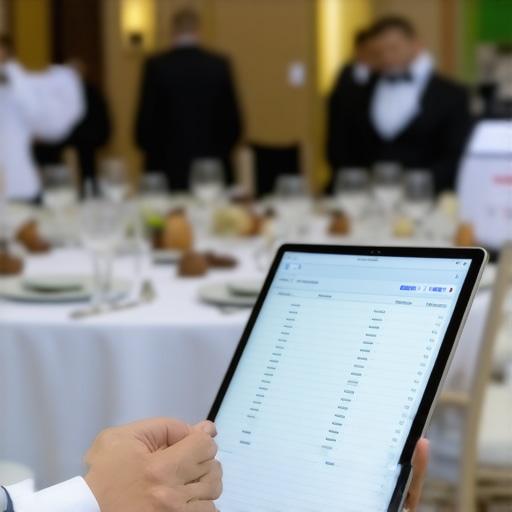
Give the Plant-Based Entree the VIP Treatment
If the steak comes out with silver-cloche service and the vegan dish is slid onto the table like a frisbee, you’ve already failed the guest. The optics of service are just as important as the flavor profile. This is the best way to handle dietary restrictions during a formal gala: serve the specialized meals first, but do it with the same flourish as the standard menu. Lately, I’ve noticed that why white glove service is making a comeback in luxury galas is because it adds a layer of intentionality to every guest’s experience, regardless of their diet. Using a hand-model approach to placement rather than reaching over a guest’s shoulder changes the entire perception of the meal.
Mastering the Silent Clear
Timing is everything in high-stakes environments. You don’t want your vegan guests sitting with a finished plate for twenty minutes while the meat-eaters are still mid-chew. You need to train your staff on how to handle plate clearing during a seated executive presentation so that the flow of the event remains uninterrupted and professional. A guest should never feel ‘singled out’ or awkward because they finished their plant-based risotto faster than others. I always tell my team: if you can how to spot a server who has not been trained in french service, it’s usually because they lack the grace to manage these subtle transitions. When you treat the vegan guest like the most important person in the room, the rest of the table takes notice, and suddenly, that plant-based dish becomes the envy of the evening.Everyone says the more the merrier when it comes to waitstaff, but in my experience, a bloated team leads to a cluttered floor and a breakdown in communication. It is far better to focus on specific server skills that make every event stand out than to hire twenty untrained bodies. This is where many hosts hit a wall: they think quantity equals luxury. It does not. In fact, the hidden risks of hiring student servers for high-end events often include a lack of spatial awareness that can physically disrupt the flow of a meal. When I plan a high-stakes dinner, I look for precision over presence. A smaller, elite team that understands the rhythm of the room is far more effective at optimizing server efficiency to enhance event satisfaction than a sea of black-and-white vests tripping over each other.
Can the Acoustics of Your Ballroom Kill the Flavor?
Believe it or not, the environment affects the palate more than the actual seasoning. I have seen chefs lose their minds because a dish tasted flat in a large, industrial space. A study by Professor Charles Spence at Oxford University found that background noise—especially the kind of high-frequency clattering found in echoey halls—can significantly diminish our perception of salt and sugar. If you do not learn how to mask echo in a high ceiling industrial wedding venue, your expensive five-course meal will literally taste worse to your guests. It is a hidden nuance that separates the pros from the amateurs. I always tell my clients: fix the room before you fix the menu. 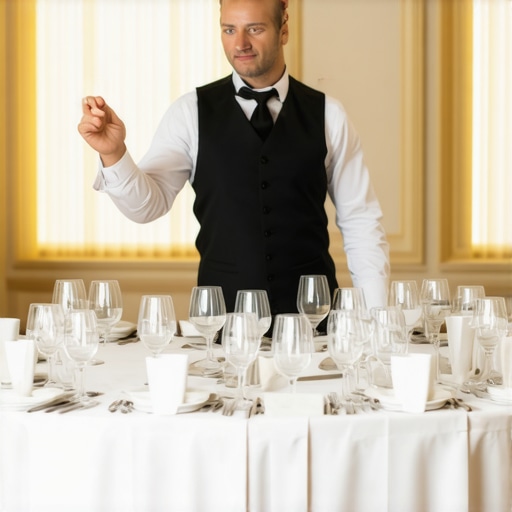
The Finger Food Trap You Did Not See Coming
Another common ‘oops’ factor is the logistics of the cocktail hour. Most planners pick hors d’oeuvres based on a photo, ignoring the reality of a guest holding a drink in one hand and a phone in the other. The danger of serving finger foods that require two hands is that it stops networking dead in its tracks. If they have to put their drink down to eat, you have failed. Similarly, why you should never use scented candles on a dinner table is because the olfactory interference ruins the chef’s work. Your guests should smell the truffle risotto, not a vanilla cupcake candle. These details might seem small, but they are the difference between an event that looks good and one that feels effortless. Have you ever fallen into this trap? Let me know in the comments.Scaling up from a 50-person dinner to a 500-person gala is where most amateurs lose their grip on quality. I’ve learned that you can’t just work harder; you have to work smarter with corporate event catering strategies for success. My secret weapon is the ‘digital pass.’ We use tablets at every station so the kitchen can see live updates as guests arrive. This is crucial because the reason your guest count always drops 20 percent at the last minute isn’t just a budget issue; it’s a waste issue. If 100 people don’t show, I don’t want 100 vegan steaks dying in the window. One specific tool I rely on is the CVap holding cabinet. According to technical documentation from Winston Foodservice, these cabinets prevent moisture loss by balancing air and water vapor. It solves the problem of why most corporate buffets fail the temperature test—traditional dry heat turns vibrant plant-based dishes into leather. I use them because they keep a roasted cauliflower steak juicy for hours without overcooking it.
Keep Your Service Standards High as the Room Gets Bigger
Maintenance of these standards requires a ruthless approach to feedback. I maintain a detailed ‘Post-Event Autopsy’ log after every single wedding. We analyze optimizing server efficiency to enhance event satisfaction by tracking how long it took to clear the main course across different zones of the room. If the clear time in the back corner lagged by more than four minutes, we adjust the server-to-guest ratio for that specific quadrant next time. This level of granularity is essential for long-term growth. Furthermore, you must ensure why your server team needs a clear chain of command on site is respected. Without a lead server for every ten tables, the communication loop between the guest and the kitchen becomes a game of ‘telephone’ that ends in a dietary disaster.
How can I keep the quality consistent as my events grow?
The answer lies in data and repetition. You cannot rely on the ‘heroics’ of a single chef or server to save a 500-person gala. You need systems that are bulletproof. This is why I focus on the ‘Invisible Gear’—the technology that makes everything move faster without the guest seeing a single wire. 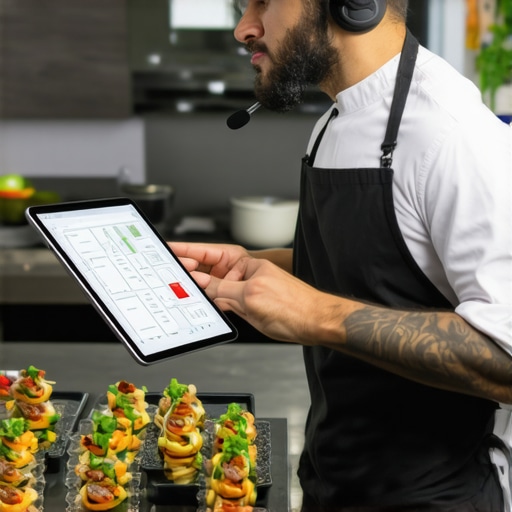 Looking ahead, I predict we will soon see AI integration in guest management. We are already seeing prototypes of software that sync with RSVP forms to create real-time kitchen priority lists based on guest arrival. It’s the next logical step in high-end service. To stay ahead of that curve today, my most advanced tip is to implement ‘Digital Plate Mapping.’ Create a cloud-based seat map that pre-assigns every dietary restriction to a specific chair number. This allows your team to boost your corporate event with expert server techniques by placing the correct meal in front of a guest before they even have to identify themselves. It feels like magic to the guest and eliminates the awkward ‘Who had the vegan plate?’ shout-out. Give this a try at your next corporate gala; it is the single fastest way to elevate your brand from ‘good’ to ‘unforgettable.’
The High-Stakes Lessons I Learned on the Kitchen Line
Over the years, I’ve realized that the ‘vegan guest’ is the ultimate litmus test for your hospitality. If you can wow the person with the most restrictions, the rest of the room is easy. I learned early on that skipping the details on plant-based plates doesn’t just hurt that guest; it lowers the perceived value of the entire event. We now treat every vegetable with the same reverence as a dry-aged steak. Remember, top server tips to elevate your event experience aren’t just about how to hold a tray; they are about empathy for the diner’s needs. If your staff treats a dietary request like a burden, the guest will taste that resentment in every bite. I’ve also found that mastering corporate event planning secrets to seamless success involves anticipating the ‘invisible’ needs—like having a secondary plant-based option ready just in case of last-minute RSVP changes.
A Few Secrets From My Personal Event Planning Toolkit
I don’t go into any high-stakes gala without a few specific resources. First, I always keep a copy of ‘The Flavor Bible’ by Karen Page and Andrew Dornenburg in my office; it is the ultimate cheat sheet for building complex plant-based flavors without relying on processed substitutes. For logistics, I rely heavily on cloud-based seating software that integrates directly with the kitchen pass. This ensures that unforgettable wedding catering ideas for a magical celebration are actually delivered correctly to the right seat. Finally, I trust CVap technology to maintain the integrity of delicate vegetables. If you haven’t looked into it, understanding why most corporate buffets fail the temperature test will completely change how you approach hot-holding for large groups.
#IMAGE_PLACEHOLDER_E#
Stepping Into the Future of Inclusive Hospitality
The days of ‘removing the chicken’ are long gone. We are entering an era where dietary inclusivity is the benchmark of luxury. When you apply corporate event catering strategies for success with a focus on plant-based excellence, you aren’t just checking a box; you are showing your guests that you value their choices and their health. Take these lessons, use the technology available, and never be afraid to make the vegetable the star of the show. Your guests—carnivores and vegans alike—will thank you for it. What’s the one plant-based dish you’ve served that actually surprised your meat-eating guests? Let me know in the comments below.