

I still wake up in a cold sweat thinking about the 2018 Winter Gala. I was young, ambitious, and convinced that I could clear five bowls of piping hot lobster bisque in a single trip. Spoiler alert: I couldn’t. One minor bump from an over-excited guest, and I’d painted a C-suite executive’s ivory blazer in shades of “seafood disaster.” It was my first major lesson in why the correct way to serve soup matters more than almost any other course. When you mess up the steak, it’s a quiet disappointment; when you mess up the soup, it’s a wet, messy, and potentially painful catastrophe.
Stop Treating Every Bowl Like a Balancing Act
Soup is arguably the most volatile item on a catering menu. It reacts to every vibration, every heavy footstep, and every slight tilt of a tray. Early in my career, I made the mistake of thinking speed was the ultimate metric for success. I was wrong. Success is actually about optimizing server efficiency to enhance event satisfaction without sacrificing the integrity of the guest’s experience (or their clothes). Developing server skills that make every event stand out isn’t just about balance; it’s about anticipation. You have to understand the physics of the slosh. According to a study on liquid oscillation published in the journal Nature, the way we walk—our natural gait—often matches the frequency that causes liquids to spill over the sides of a container. It’s a literal recipe for a mess. This is why learning how to train temporary server staff on high-end table manners usually starts with the “soup glide,” a specific way of moving that keeps the liquid centered and the tray steady.
Can soup ever really be safe at a crowded party?
I get the skepticism. If you’re planning a wedding with 200 people, the idea of servers weaving through tables with hot liquid sounds like a lawsuit waiting to happen. But it doesn’t have to be. We’re going to solve the spill problem once and for all today. Whether you’re looking for wedding catering tips from industry experts or you’re a server yourself trying to level up, I’m going to show you the specific grips and movement patterns that keep the bowl full and the guests dry. Have you ever had a soup disaster of your own, or are you currently terrified of including a bisque on your corporate menu? I’d love to hear your horror stories—trust me, I’ve seen them all.
Master the Mechanics of the High-Stakes Pour
To stop the slosh, you have to treat your tray like a gyroscope rather than a shelf. Most beginners make the mistake of placing bowls toward the edge of the tray to make them easier to grab. This is a one-way ticket to a dry-cleaning bill. The center of gravity is your only friend in a crowded ballroom. When I’m managing a high-stakes dinner, I insist that the heaviest or fullest bowls sit dead center. This creates a stabilizing anchor that absorbs the minor tremors of your hand. Following an essential checklist for successful corporate event catering means ensuring your equipment is up to the task; use non-slip tray liners or, in a pinch, a damp (not soaking) linen napkin to create friction between the china and the tray.
Find Your Center Before the First Step
Before you even lift the tray, visualize your path. I remember a 400-person gala at a local museum where the floors were polished marble and slicker than an ice rink. I watched a veteran server take a deep breath, settle their weight into their heels, and lift the tray using their shoulder and core, not just their wrist. If you rely on your wrist for stability, the fine motor muscles will fatigue within minutes, leading to the dreaded ‘tremble’ that sends ripples through a consommé. This is a foundational element when you boost your corporate event with expert server techniques: the power comes from the legs and the core, not the arm.
Walk Like You Are Gliding on Ice
The ‘soup glide’ isn’t just a fancy term; it’s a physical necessity. Instead of a traditional heel-to-toe walk, which creates a vertical jar with every step, you want a low-impact shuffle. Keep your knees slightly bent to act as shock absorbers. Think of yourself as a cinematographer holding a steady cam. This movement pattern is a core part of how to train temporary server staff on high-end table manners because it prevents the ‘resonant frequency’ spill I mentioned earlier. During that 2018 gala disaster, if I had just kept my knees soft, that bump from the guest wouldn’t have been a catastrophe; my body would have absorbed the impact instead of the tray.
The Final Approach to the Table
The most dangerous moment is the transition from tray to table. As you reach the guest, don’t just lunge forward. Stop completely. Lower your center of gravity by widening your stance. This stabilizes your entire frame before you reach for the bowl. For larger events, the logistics of running a 3-course dinner for 800 people require precision timing so that the soup arrives hot but not boiling, which also reduces the risk of steam-related slips. Always clear a path with your eyes before you move your hands. If the table is cluttered, wait. A three-second delay is better than a soup-soaked centerpiece. To maintain this level of precision across a large room, why your server team needs a designated captain for every 50 guests becomes obvious—they act as the air traffic controllers, clearing the way so you can focus entirely on the liquid in front of you.
Most planners think the best server is an invisible one. I used to believe that too—that if the guests didn’t notice us, we were winning. But that’s a dangerous myth. In high-stakes environments, “invisible” servers often lead to forgotten dietary needs and stagnant water glasses. True expertise lies in what I call “assertive grace.” It’s about taking up space confidently enough to manage the flow of the room while maintaining the elegance required for luxury wedding catering ideas for a fairytale atmosphere. When a server is too timid, they lose control of the tray and the table.
The High Cost of Cutting Corners on Your Frontline
One of the biggest traps in the industry is trying to cut costs on the frontline. I’ve seen countless organizers fall into the hidden risks of hiring student servers for high-end events. While enthusiastic, temporary or student staff often lack the spatial awareness that comes from years on the floor. When you’re serving a delicate bisque or a hot consommé, a split-second hesitation in a crowded aisle can lead to a spill. This is why you need to know how to spot a fake luxury server team before they ruin your gala. Experienced staff don’t just carry plates; they read the room’s micro-interactions to prevent accidents before they happen.
Why does the ‘invisible server’ myth actually hurt your event?
Research from the Cornell School of Hotel Administration suggests that “perceived service quality” is higher when guests feel a server is attentive and accessible, rather than entirely absent. When guests have to look for a server to ask for a refill or a napkin, their focus shifts from the event to their own unmet needs, creating a subtle layer of frustration. Expert service involves being “present but not intrusive.” This is a key reason why white glove service is making a comeback in luxury galas. It’s not about the literal gloves; it’s about the hyper-standard of proactive attentiveness they represent. If you see a server standing with their weight slightly forward, scanning their section like a hawk, you’re looking at a pro. Conversely, you should definitely check out how to spot a server who has not been trained in French service to understand the technical gap between a plate-carrier and a hospitality professional. Have you ever been to a party where the servers were so ‘invisible’ they were actually non-existent? Have you ever fallen into this trap? Let me know in the comments!
Master the Subtle Art of the Sweep
Nuance is what separates a good event from a legendary one. To elevate your event experience, focus on the “sweep”—the synchronized clearing of a table. A master server team clears in unison, moving in a clockwise direction that avoids interrupting the guest’s line of sight. This requires a clear chain of command on site to ensure every table is handled with the same rhythm. Without this choreography, the room feels chaotic, even if the food is perfect.
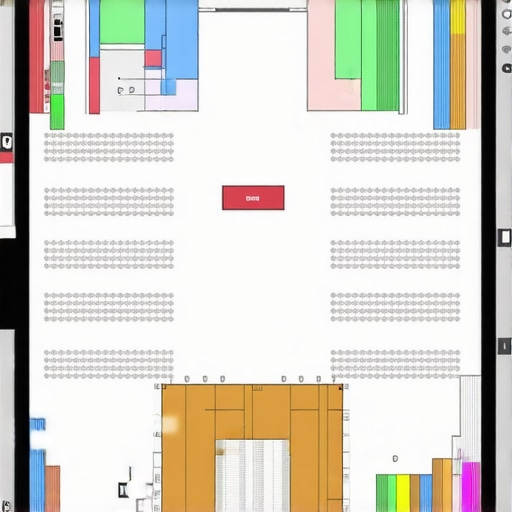
When the sweep is done and the plates are cleared, the real work of maintaining the machine begins. I’ve found that the difference between a one-hit-wonder event and a consistent catering powerhouse is the digital infrastructure you build behind the scenes. I personally swear by professional-grade floor planning software because it allows me to visualize the service lanes before a single table is set. When you are deep into the ultimate guide to corporate event catering logistics, you realize that every inch matters. According to the NFPA 101 Life Safety Code, specifically the requirements for assembly occupancies, maintaining clear aisle widths isn’t just a legal requirement; it’s a physical necessity for high-volume service. I typically aim for 60-inch aisles, which is well above the 36-inch minimum, ensuring that two servers carrying hot trays can pass each other without a collision. This level of spatial awareness is a non-negotiable part of effective catering strategies for corporate event impressiveness.
How can I keep my server team at peak performance for every gala?
Scaling your excellence requires a transition from memory-based service to system-based service. To maintain high standards over time, I use a Dietary Dashboard—a simple, color-coded physical card system that matches our digital guest list. This enables us to brief your server team on complex dietary restrictions in minutes without the chaos of shouting in a crowded kitchen. Maintaining this level of precision involves conducting a post-mortem after every event. We analyze the traffic jams in the floor plan and adjust the digital template for the next booking. If you want to master corporate event planning secrets to seamless success, you have to treat your floor plan as a living document. Looking ahead, I predict we will soon see Augmented Reality (AR) integrations where servers use head-up displays to see a guest’s specific needs in real-time, but for now, success relies on why your event floor plan needs wider aisles for mobility access and rigid discipline. I challenge you to implement a color-coded dietary card system at your very next 50-person event; the reduction in kitchen-to-floor friction will be immediate and transformative. We have almost reached the finish line of a perfect service, but the final hand-off is where the legacy of the night is truly cemented.
The Three Brutal Truths Only 500-Person Galas Can Teach You
After years of managing high-pressure environments, I realized that technical skill is only half the battle. First, the sound of the room is your best diagnostic tool; if the clatter of silver starts to outpace the hum of conversation, your timing is off and guests are getting restless. Second, never underestimate the power of temperature as a psychological trigger. We often focus so much on the spill that we forget the heat; understanding why cold plates are the enemy of a perfect filet mignon or a hot soup is a lesson every server learns the hard way. Lastly, a great server is a spatial architect. If you cannot predict where a guest will lean or when a chair will pull out, you are not yet ready for a high-volume floor.
Gear and Wisdom to Keep Your Trays Steady
To truly excel, you need tools that match your ambition. I swear by industrial-grade non-slip silicone tray liners; they are far more reliable than the traditional damp napkin trick during a high-speed service. For those looking to go deeper into the theory of hospitality, I highly recommend the service standards published by the Cornell School of Hotel Administration; their data on guest satisfaction completely changed how I view the invisible server myth. When planning the ultimate wedding reception meal, I always consult floor-planning software to ensure our service lanes allow for grace rather than just legal minimums. If you are a couple looking to hire, knowing how to choose the perfect servers for your wedding involves looking for teams that prioritize these subtle mechanics of movement.
#IMAGE_PLACE_HOLDER_E#
Your Evolution from Plate Carrier to Hospitality Architect
The transition from someone who just carries food to someone who orchestrates an experience is a profound one. It requires a commitment to the small details—the glide of your step, the center of gravity on your tray, and the proactive scanning of the room. Developing server skills that make every event stand out takes practice and a few spilled bisques along the way, but the payoff is an event where guests feel truly cared for, rather than just catered to. Go out there, keep your knees soft, and treat every tray like a masterpiece in motion. Have you ever had a moment where a server’s quick reflexes saved your evening from a seafood disaster? I’d love to hear about it in the comments!