

I’ll never forget the sound of a snare drum echoing off the exposed brick walls of a 600-square-foot urban loft. It wasn’t the cool, indie-concert vibe the couple had envisioned. Instead, it was a literal assault on the senses. I watched, mortified, as a cellist tried to navigate the crowded floor, her bow nearly taking out a guest’s spectacles. That was my ‘lightbulb moment.’ I had insisted on a live quartet for a tiny dinner party, and the result was a cramped, noisy disaster where guests couldn’t even hear themselves think. We often think ‘live’ equals ‘luxury,’ but in tight quarters, it often just equals ‘clutter.’
Why My Biggest Space-Planning Failure Changed Everything
In those early days of planning, I made the classic mistake of valuing the idea of a band over the reality of the room’s dimensions. Just as you have to learn how to choose a catering style based on your venue size, you must be brutally honest about where your entertainment will actually stand. A five-piece band doesn’t just need five chairs; they need space for amps, cables, mic stands, and a drum riser that inevitably eats up the dance floor. When you are already trying to figure out how to set up a bar to avoid congestion in small rooms, adding a literal stage-worth of equipment is a recipe for a bottleneck. A DJ, conversely, fits into a corner smaller than a standard buffet table. Today, I’m going to show you how to maximize your floor plan and keep the energy high without forcing your guests to squeeze past a bass player just to get to the restroom. Have you ever felt trapped in a room where the music was simply too big for the walls?
Is a DJ actually going to feel cheap compared to a band?
This is the fear I hear most often from my neighbors and clients alike. People worry that a DJ is just a person with a laptop, lacking the soul of live instruments. But the logic of the DJ in small spaces isn’t about saving money—it’s about acoustic control. In a small room, live drums have one volume: loud. According to the Centers for Disease Control and Prevention, sounds above 85 decibels can cause hearing damage over time, and a live drum kit in a small room easily cruises past 100 decibels. A DJ allows you to maintain that ‘sweet spot’ of energy where people can still network and laugh. It’s the same principle as knowing how to reduce noise during the transition from dinner to dancing; it’s about the guest experience, not just the spectacle.
Winning the Battle of Square Footage Without Sacrificing the Vibe
When every square inch counts, you have to prioritize the flow of the evening. A DJ gives you back enough floor space for two extra dining tables or a much-needed lounge area. I’ve seen events where the ‘stage’ took up 30% of the usable area, leaving guests huddled like sardines. By choosing a professional with a compact setup, you aren’t settling—you are strategically designing a better party. We’re going to dive into the technical reasons why a digital setup beats a brass section when the ceiling is low and the guest list is tight, starting with the physics of sound and ending with your sanity.
Map Out Your Floor Plan with a Measuring Tape and No Mercy
You cannot eyeball a small room and hope for the best. To make a tight space feel intentional rather than crowded, you need to treat your floor plan like a high-stakes game of Tetris. When I worked a corporate gala in an old historic library, I ignored the measurements and tried to squeeze a jazz trio into a corner near the kitchen. The double bass ended up literally blocking the server exit, and every time a tray of hors d’oeuvres came out, the bassist had to lean dangerously to the left. It was a logistical nightmare that could have been avoided by choosing a digital setup. A professional DJ setup typically requires a 6×6 foot footprint at most, whereas a band needs at least triple that to avoid looking like they are hovering over the guests’ dinner plates. This is why why venue walkthroughs should happen at the same time as your event is such a critical rule; you need to see the shadows and the tight corners when the sun is actually down and the lights are low.
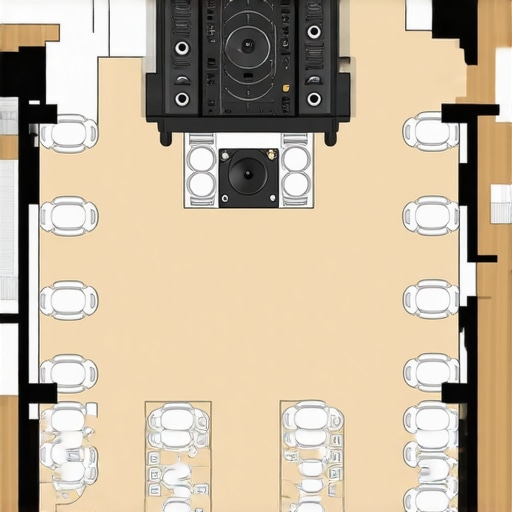
Ditch the Stage to Win Back Your Dance Floor
In a small venue, a stage is often your worst enemy. It creates a physical and psychological barrier that eats up precious square footage. By opting for a DJ, you can keep the entertainment on the same level as the guests, which creates a more immersive, ‘boiler room’ style atmosphere that feels trendy rather than cramped. This approach is one of the most effective corporate event catering strategies for success because it allows your servers to move freely without navigating steps or risers. Think of a band’s equipment like putting an oversized sectional sofa in a studio apartment; it functions, but you can’t walk around it. A DJ’s controller is the sleek smartphone of the entertainment world—all the power, none of the bulk.
Position Your Sound to Avoid the Acoustic Dead Zone
The physics of a small room are unforgiving. Sound bounces off hard surfaces, and in a tight space, those reflections can turn a beautiful song into a muddy mess of noise. This is where the impact of ceiling height on event acoustic quality becomes obvious. A DJ can use ‘active’ speakers on thin stands that take up almost zero floor space but can be angled to hit the dance floor specifically, rather than blasting the guests sitting at the nearby tables. I once saw a wedding where the speakers were placed directly behind the elderly relatives’ table because there was nowhere else for the band’s massive PA system to go. Those poor guests ended up leaving before the cake was cut. With a compact DJ rig, you can tuck the speakers into the ‘dead’ corners of the room, ensuring the volume is concentrated where people are dancing and whisper-quiet where they are eating.
Control the Chaos with a Single Power Cord
Technical logistics are the silent killers of small-room vibes. A full band requires a spiderweb of power strips, XLR cables, and monitor wedges that are a tripping hazard for your guests and your staff. If you are already trying to optimize server efficiency to enhance event satisfaction, the last thing you need is a waiter tripping over a guitar cable. A modern DJ setup usually runs off a single dedicated circuit and hides all the ‘guts’ of the system inside a small, branded booth or under a clean linen. You can even learn how to hide unsightly power cables at a corporate gala by using gaff tape and strategic furniture placement, but it is infinitely easier to hide one cord than twenty. This level of cable management isn’t just about aesthetics; it’s about safety in a room where the margin for error is measured in inches. Always remember that why you should always do a sound check before the CEO speaks applies to the music too; in a small room, you need to know exactly how that bass hits the walls before the first guest walks in.
Why more staff isn’t always the solution to a seamless dinner
Most planners believe that throwing more bodies at a service problem will fix a slow kitchen or a thirsty crowd. It’s the ultimate industry myth: the idea that a 1:8 server-to-guest ratio is the golden ticket to luxury. In my experience, especially in those tight lofts we discussed earlier, overstaffing is the fastest way to kill the ‘vibe’ and create physical friction. When you have too many servers in a confined space, they start to ‘cluster’—shadowing each other and blocking the very pathways your guests need to use. Instead of focusing on headcount, you should be looking at server skills that make every event stand out. A lean, highly trained team of four will always outperform a disorganized group of eight who are constantly apologizing for bumping into chairs.
Is there a perfect math for server density in a confined gala?
This is where things get technical. According to research from the Cornell University School of Hotel Administration, the perceived quality of service is often tied more to the efficiency of movement than the frequency of interaction. In a small room, every additional person on the clock is another obstacle for the sound to travel through and another body generating heat. This is why you must how to choose the right staffing ratio for a VIP event based on the architecture, not just the guest count. If your venue has narrow corridors, you need ‘ballet’ service—where staff move in a synchronized loop—rather than the standard ‘zone’ defense. If you don’t account for this, you’ll face the ‘Oops’ factor: the dreaded Lead Server Paradox.
The trap of the working lead and the service bottleneck
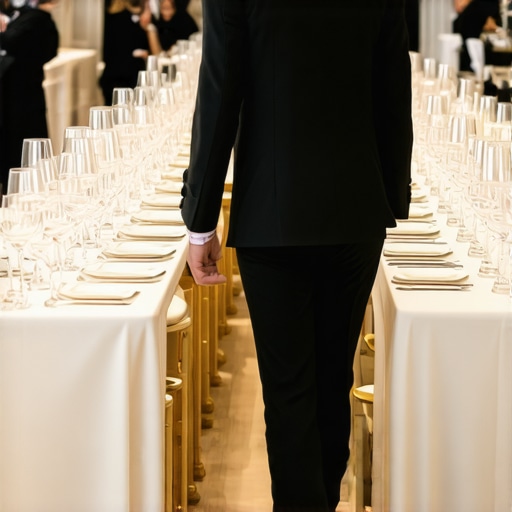
The most common mistake I see in high-stakes catering is when the person in charge of the floor starts clearing plates. It sounds noble, but it’s a disaster. When your lead server gets into the weeds of a single table, they lose their ‘bird’s eye view’ of the room. I’ve seen entire drink services grind to a halt because the lead was busy folding a napkin for a VIP, unaware that the bar line had backed up into the foyer. This is exactly why your lead server should never be the one managing the kitchen or performing basic table tasks. They are the air traffic controller; if they are on the ground refueling a plane, nobody is watching the sky. To keep the energy flowing, you need to be optimizing server efficiency to enhance event satisfaction by keeping your leaders mobile and unburdened.
Identify a partner versus a simple staffing agency
When the room is small, the personality of the staff matters as much as their speed. You aren’t just looking for plate carriers; you are looking for people who can read the room. There is a massive the difference between a staffing agency and a service partner. A partner understands that in a tight space, the staff is part of the decor. They need to be invisible until they are needed and present the moment a glass is empty. This level of nuance is what separates a chaotic ‘catered event’ from a curated experience. Have you ever fallen into this trap of thinking more people meant better service, only to have the room feel like a crowded subway car? Let me know in the comments.
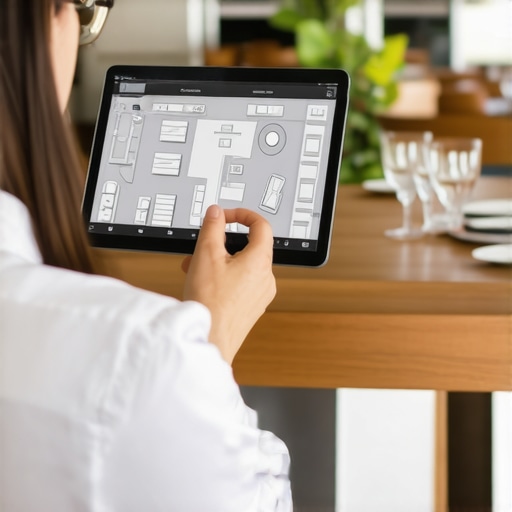
Experience has taught me that the difference between a frantic night and a flawless one is the toolset you carry into the venue. I used to rely on a tattered notebook and a hope that my mental math was right, but that’s a recipe for a 50% increase in stress. Today, I don’t step foot into a ballroom without a digital 3D mapping tool. These programs allow me to stress-test the ultimate guide to corporate event catering logistics by virtually placing every chair, amp, and server station. You quickly realize that the ‘standard’ layout provided by the venue often ignores the actual volume of a human body in motion.
Stop Guessing Where the Tables Fit
I strictly use digital floor-planning software to visualize the ‘flow lanes’ for my staff. When you can see a bird’s-eye view of the room, you spot the bottlenecks before they happen. For example, if your bar is within ten feet of the kitchen entrance, you are creating a permanent traffic jam. By mapping it out, you can ensure that your essential checklist for successful corporate event catering includes a clear path for hot food. This isn’t just about comfort; it’s about safety. According to the International Live Events Association (ILEA), failing to account for ‘dynamic load’—the space people take up while moving versus standing still—is the primary cause of service delays in urban venues. I now insist on a minimum of 42 inches for any primary service vein to allow two servers to pass each other without a collision.
The Tech Stack I Trust for Every High-Stakes Dinner
Beyond floor plans, my most valuable tool is a silent communication system. I’ve transitioned my lead servers to discreet earpieces linked to a local mesh network. This allows the kitchen to whisper to the floor lead that the main course is three minutes out without a single guest hearing a frantic shout. This level of coordination is what builds server skills that make every event stand out. It transforms a group of individuals into a synchronized unit. We also utilize a shared cloud-based ‘Event Script’ that everyone can access on their phones during breaks. If the CEO decides to move their speech up by twenty minutes, the entire team knows instantly. This is why top server tips to elevate your event experience always start with communication; if you aren’t talking, you’re failing.
How do I maintain service standards during the late-night slump?
Maintenance is about more than just equipment; it’s about the team’s mental endurance. After the four-hour mark, even the best servers start to lose their edge. My secret is the ‘Second Wind’ huddle. I pull the team in for a three-minute standing meeting—never sitting—to reset the goals for the dessert and coffee service. This is the moment to revisit how to organize a staff meeting before a 500-person dinner but on a micro-scale. We swap out heavy tasks, rotate the person on the ‘static’ bar station to a ‘mobile’ floor position, and re-hydrate. Looking forward, I predict we will see AI-driven guest tracking sensors becoming standard in luxury venues, providing real-time heat maps of where the ‘vibe’ is flagging so we can deploy staff or adjust lighting instantly. For now, trust your eyes and your earpieces. My advanced tip for you this week: try implementing a ‘No-Phone Zone’ for the kitchen-to-floor transition area to ensure every server is 100% focused the moment they enter the guests’ sightline.
The Brutal Truth About Entertainment Overkill
Over the years, I’ve realized that the true ‘wow factor’ isn’t a loud band; it’s the invisible silence of a perfectly executed service. When you stop trying to cram a festival-sized experience into a boutique room, you give your guests the luxury of actual conversation. My biggest lightbulb moment happened when I realized that a professional DJ isn’t a compromise—it is a strategic choice for acoustic comfort. You have to be willing to audit your server-to-guest ratio for VIP dinners with a focus on movement rather than just raw numbers. It is always better to have four servers who move like dancers than ten who move like blockers in a hallway. Intimacy requires precision, and precision requires space.
My Personal Go-To Tools for Stress-Free Planning
If you want to move from an amateur ‘hope for the best’ approach to a professional standard, you need a reliable stack of resources that remove the guesswork. I personally swear by digital mapping software to visualize every tight corner before a single chair is moved. For real-time coordination, a local mesh network for earpieces is non-negotiable—this is how you apply top server tips to elevate your event experience without a single guest hearing a frantic shout. I also recommend keeping a physical ‘Go-Bag’ with gaff tape, extra XLR cables, and printed floor plans; tech can occasionally fail, but your reputation should not. Understanding the difference between a staffing agency and a service partner is the final piece of the puzzle; you need a team that thinks two steps ahead of the guests’ needs.
Create a Night Your Guests Will Actually Remember
Success in small venues comes down to your willingness to prioritize the guest experience over traditional expectations. By mastering corporate event catering strategies for success, you transform a potentially cramped room into an intimate, high-energy environment that feels exclusive rather than crowded. Don’t be afraid to cut the clutter, ditch the bulky stage, and lean into the digital tools available to you. Every time you refer back to the ultimate guide to corporate event catering logistics, you are sharpening the skills that make you an indispensable planner. You already have the vision; now you have the technical plan to execute it flawlessly. Have you ever had to change your entertainment plans last minute due to a space issue? Let me know in the comments below!