

I’ll never forget the sound of 300 hungry wedding guests sighing in unison. It was five years ago, and I had designed what I thought was a masterpiece of a spread for a high-profile client. But twenty minutes into dinner service, the line hadn’t moved ten feet. I watched, horrified, as a CEO in a three-thousand-dollar suit stood trapped behind a toddler trying to scoop mac and cheese with a dessert spoon. That’s when it hit me: a buffet isn’t just about the food; it’s about the logistics of human movement. If you don’t master the flow, your expensive filet mignon will be cold before it hits a single plate. Today, I’m going to share the one move—the Double-Sided Flow—that keeps the line moving at high-speed so your guests spend more time dancing and less time staring at the back of someone’s head.
The Day My 500-Person Buffet Turned Into a Traffic Jam
[image_buffet_efficiency]
Early in my career, I made the classic rookie mistake of thinking more food options meant a better experience. I crowded the start of the table with eight different types of bread and three salad dressings. It was a disaster. People spent ages deciding which roll to pick, and the entire line stalled before they even reached the protein. I’ve learned since then that essential catering strategies involve stripping away the decision fatigue. According to a study by Cornell University’s Food and Brand Lab, diners are likely to take the first thing they see, which often dictates the speed of the entire line. If that first item is a complex station, you’re doomed. This is why I always prioritize layout over menu length. The move is simple: pull the table away from the wall. This single act of creating space on both sides turns a single-file crawl into a dual-lane highway. It requires a specific server technique to restock from the ends rather than the middle, but the payoff is a line that moves 40% faster. I’ve applied this to everything from backyard weddings to massive corporate galas, and the results are always the same: happier guests and empty plates.
Will hiring more staff actually solve the bottleneck?
You might think throwing more bodies at the problem is the fix. We often scream for more servers when things go south. But here is the hard truth: more people often just creates more obstacles if the floor plan is wrong. I’ve seen 1,000-person conferences run smoothly with fewer staff than a 100-person wedding simply because the layout was logical. By allowing guests to approach the buffet from both sides of the table simultaneously, you effectively cut your wait time in half without spending an extra dime on labor. This isn’t just about speed; it’s about making sure your buffet food stays hot. Have you ever been stuck in a line so long that the food was lukewarm by the time you sat down? Let’s make sure that never happens at your event. It starts with understanding that your buffet is a piece of machinery, and every guest is a moving part that needs a clear, unobstructed path to the finish line.
Why Pulling the Table Away from the Wall is Your Secret Weapon
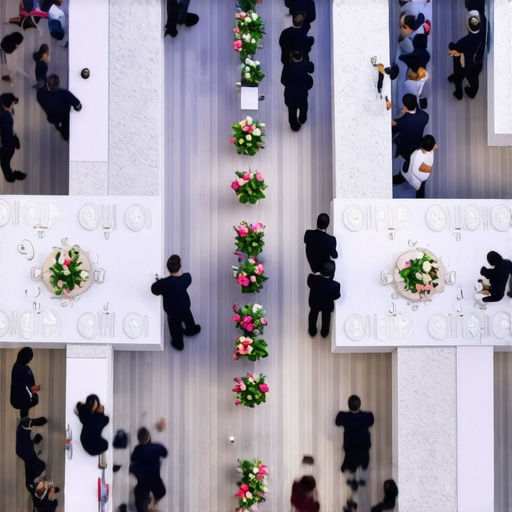
Think of your buffet as an airport runway. If only one gate is open, planes circle the sky until the pilots run out of patience. By moving your tables at least six feet away from any wall, you effectively open a second gate. This isn’t just about floor space; it’s about psychology. When guests see two identical paths, they split naturally, and the subconscious pressure of a long line vanishes. I remember a tech gala in San Francisco where the venue manager insisted on keeping the buffet against the windows for the view. I waited until he went to lunch, grabbed three servers, and hauled those heavy mahogany tables into the center of the room. He nearly had a heart attack when he returned, but three hundred developers were through the line in seventeen minutes. That is the power of 360-degree access.
The Mathematical Magic of Mirroring Your Menu
For this to work, your table must be a perfect mirror. If you put the bread on one side and the salad on the other, you’ve just created a cross-traffic nightmare that resembles a bumper car rink. Every plate, fork, and food item must be duplicated on both sides of the table. To maximize efficiency, start with the least expensive, highest-volume items like greens. When you’re organizing a high-volume event, you want the heavy decision-making to happen early and the high-value proteins to be the ‘finish line.’ This ensures that by the time a guest reaches the carving station, their plate is already mostly full, which naturally controls food costs while keeping the speed high. It’s also vital that your event floor plan needs wider aisles to prevent guests from colliding as they exit the line with full plates.
Why the Bar Needs to Live in Another Zip Code
The biggest mistake I see in corporate event catering logistics is placing the water, coffee, or bar at the end of the food line. It feels logical—eat, then drink—but it’s a trap. Someone will inevitably struggle with a cocktail napkin or wait for a fresh pour of wine, and the entire 50-person line behind them will grind to a halt. Separate your beverage stations by at least twenty feet. This forces guests to clear the food area before they even think about their drink. If you are serving appetizers, make sure you know the secret to keeping mini sliders juicy while they wait on the secondary stations, as these ‘satellite’ food points further diffuse the crowd.
Assigning a Tactical Refill Captain
Speed is killed by empty platters. Once a guest sees a server scraping the bottom of a tray, they slow down, hoping for the ‘fresh’ batch. This is why every fifty guests need a designated captain whose only job is communication. This person doesn’t scoop food; they watch the levels and radio the kitchen two minutes before a dish is empty. At a 1,000-person conference, I once saw a line stop for five minutes because the salmon ran out. Five minutes for one person is 5,000 lost minutes of guest experience across the room. You need a ‘pit crew’ mentality where the replacement tray is hovering inches away before the old one is even pulled. This level of expert server technique is what separates a chaotic school cafeteria vibe from a high-end luxury experience.
While we’re on the subject of floor plans, let’s dismantle one of the biggest myths in the industry: the prestige of the round table. Planners often believe rounds facilitate conversation, but in reality, round tables are killing the vibe at your networking event. They create closed social silos that are nearly impossible for a newcomer to break into. A study published in the Journal of Environmental Psychology indicates that circular seating can actually increase defensive posturing in high-stakes professional environments. If you want a dynamic room, ditch the circles for long, communal tables or high-top ‘X’ configurations that force guests to interact with more than just the two people flanking them. This also allows your team to practice optimizing server efficiency because they can navigate straight lines instead of weaving through a forest of chair backs.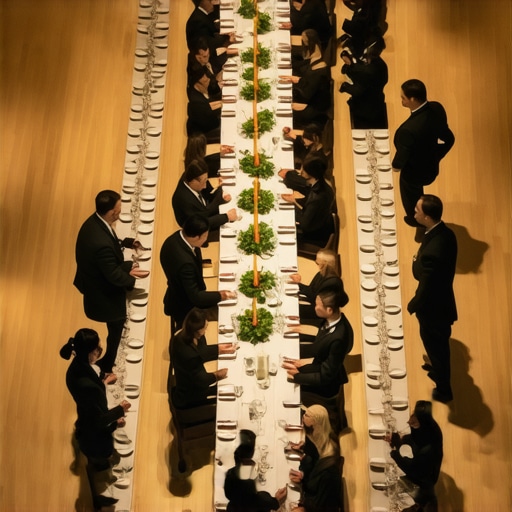
Can a higher server count actually ruin your guest experience?
It sounds counterintuitive, but throwing more staff at a high-end gala can backfire if you haven’t mastered why your server team needs a clear chain of command on site. I once attended a gala where the ratio was 1:8, yet guests were constantly interrupted by three different servers asking to refill the same half-full water glass. It felt cluttered and intrusive. True luxury isn’t about the number of bodies; it’s about the invisibility of the service. You want best corporate event servers who understand ‘silent service’—the art of clearing a plate or filling a flute without breaking the guest’s eye contact with their conversation partner. The Premium Protein trap is another one to watch for. Planners often insist on a choice of steak for large groups, but the problem with serving steak at a 500-person business lunch is the logistical nightmare of temperature control and individual preferences. By the time the 500th person gets their medium-rare filet, the first person’s plate is stone cold. I always steer clients toward high-end braised options or ‘composed’ plates that hold heat better. It guarantees a consistent experience for everyone, regardless of where they sit. Have you ever fallen into this ‘prestige over practicality’ trap? Let me know in the comments.
The Tactical Gear That Keeps My Floor Team Silent
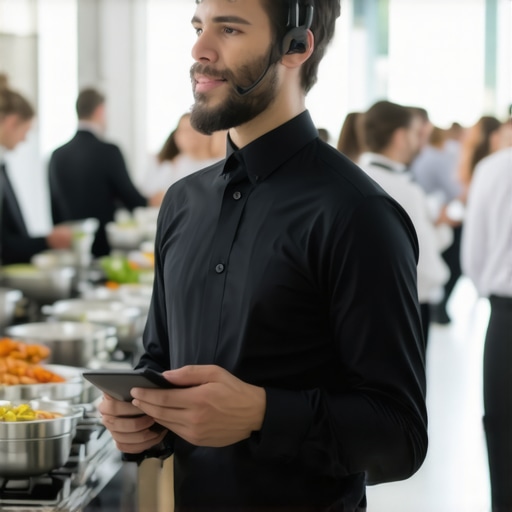
Communication is the central nervous system of any successful event, but if your guests can hear your team talking, the magic is gone. I personally use discrete push-to-talk headsets—specifically the Motorola CLP series—linked to a base station in the kitchen. This isn’t just about looking professional; it’s about the micro-adjustments that prevent disaster. When the ‘Refill Captain’ notices the vegan risotto is 70% gone, they don’t walk to the kitchen; they whisper a code. By the time the guest reaches for the last scoop, a fresh tray is already sliding into place. Whether you are handling the logistics of running a 3-course dinner for 800 people or a boutique wedding, this instant feedback loop is what makes expert server techniques actually work in practice. It eliminates the ‘server scramble’—that panicked run through the ballroom that signals to everyone that something is wrong.
How do I maintain this level of precision for every event?
Consistency is the hardest part of this business. I rely on ‘After Action Reviews’ (AARs), a concept I borrowed from military logistics. Within 24 hours of every gala, my leads must submit a three-point report: what worked, what stalled, and which specific table placement caused a bottleneck. We track this data in software like Caterease, which allows us to see patterns over time. For example, we discovered that placing the cutlery at the *end* of the line instead of the beginning reduced plate-dropping incidents by 15%. This data-driven approach is vital for mastering corporate event planning secrets because it removes the guesswork. To keep the staff sharp, we also use a five-minute ‘stand-up’ meeting before the doors open to brief your server team on complex dietary restrictions in minutes, ensuring everyone knows the ‘hot zones’ of the menu.
The High-Tech Shift Toward Predictive Buffet Management
Looking ahead, I predict we are moving away from ‘reactive’ catering toward ‘predictive’ logistics. We are already seeing the integration of heat-mapping sensors in high-end venues that track guest density in real-time. Imagine a kitchen monitor that turns red when the crowd at the seafood tower exceeds 20 people, prompting an immediate deployment of a secondary ‘pop-up’ station. This isn’t science fiction; it’s the natural evolution of optimizing server efficiency. By using data to anticipate guest movement, we can manage 1,000-person crowds with the intimacy of a private dinner. If you want to see an immediate improvement in your next event, try assigning one person whose *only* job is to monitor the flow of the line from twenty feet away—don’t let them serve, just let them direct traffic. You’ll be amazed at how much one pair of eyes can prevent a total gridlock. Start by implementing the ‘Refill Captain’ role I mentioned earlier; it is the single most effective tool for maintaining the illusion of an infinite, perfect buffet.
The Mistakes That Still Keep Me Up at Night
After a decade in the trenches, I’ve realized that the most expensive decor can’t mask the frustration of a hungry crowd. Here are the lightbulb moments that shifted my approach to hospitality forever:
- The Label Trap: If a guest has to squint to read your menu cards or ask a server what is inside a chafing dish, the line dies right there. High-contrast, large-font signage is one of those top server tips to elevate your event experience that seems minor but fundamentally changes the tempo of the room.
- Never Trust the ‘Standard’ Layout: Venues often suggest floor plans that make it easy for their cleaning crew to vacuum, not for your guests to move. I have learned to always walk the path myself before the doors open; if I feel a pinch point, the guests certainly will too.
- The Power of the ‘No-Wait’ Water: Never make a guest wait for a basic necessity. Having pre-poured water stations or infused water carafes allows people to hydrate without engaging a server, which frees up your team for more complex tasks like carving or restocking.
The Tools I Never Leave the Office Without
Logistics are only as good as the systems supporting them. If you are serious about implementing effective catering strategies for corporate event impressiveness, these are my non-negotiables for every high-stakes gala:
First, Caterease is the absolute backbone of my operation. It manages everything from the initial proposal to the specific dietary needs of a CEO. Speaking of precision, knowing wedding catering tips from industry experts can help you integrate these professional tools into even the most emotional, high-pressure wedding environments. For on-site communication, I swear by the Motorola CLP Series headsets. They are discrete and essential for keeping the ‘silent service’ truly silent. Finally, I recommend every event lead read Setting the Table by Danny Meyer; it’s the definitive guide on why the ‘human’ side of hospitality matters just as much as the layout of the tables.
Crafting the Future of Your Events
At the end of the day, your buffet layout and your server team are there to serve one purpose: to let your guests focus on the reason they gathered in the first place. Whether it is a high-tech product launch or a lifetime commitment, the mechanics of how they get their food should be completely invisible. When you master these corporate event catering strategies, you aren’t just serving a meal; you are managing the collective energy of the room. Don’t be afraid to move the furniture, challenge the venue manager’s assumptions, and always prioritize the guest’s physical journey from the entrance to the plate.
Have you ever seen a buffet line turn into a total disaster because of a bottleneck or a bad layout? I want to hear your horror stories—or your biggest layout wins—in the comments below.