

I still remember the first wedding I ever planned where the guest list hit that danger zone of 200 people. I was terrified the soul of the celebration would get lost in the shuffle of a massive crowd. I’d seen it happen before: a beautiful couple at the head table looking like they were presiding over a corporate board meeting rather than a celebration of love. I once made the huge mistake of thinking that bigger spaces just needed louder music to feel full. I was wrong. The noise just bounced off the walls and made everyone retreat into their own shells instead of talking. You want your guests to feel like they are at the world’s most exclusive dinner party, not a busy transit hub. Today, I’m sharing the hard-won secrets I’ve gathered from years in the catering trenches to help you keep that warm, fuzzy feeling alive, even when the room is packed. [IMAGE_PLACEHOLDER]
The Secret Sauce of Large-Scale Intimacy
Most people think intimate means small, but that is a total myth. Intimacy is actually about the quality of the connection and the atmosphere you create. When you cross the 150-guest threshold, the energy often starts to leak out of the room like air from a popped balloon. I’ve learned that the trick is to create neighborhoods within your floor plan. Early in my career, I stuck to the old-school rule of using massive rounds, but I soon realized that round tables can sometimes kill the energy by creating too much physical distance between people. Research from the Cornell University School of Hotel Administration suggests that physical environment and table layout significantly impact the rate of social interaction and guest satisfaction. You want a setup that encourages leaning in, not shouting across a sea of white linen.
Is a 200-person wedding just too big for a cozy vibe?
I get this question every week from nervous couples who fear their big day will feel cold or processed. The answer is a resounding no, provided you have top-tier servers for your reception who know how to move like shadows. The small-scale feeling comes from the micro-details—the way a server remembers a guest’s preference or how you avoid tall centerpieces that block sightlines across the room. Have you ever walked into a massive event and felt instantly like just another number in the crowd? I want to make sure your guests feel like the only people in the room. We are going to look at how to keep your event schedule on track so the night flows like a long, lazy dinner with old friends rather than a rushed production.
Break the Room Into Intimate Neighborhoods
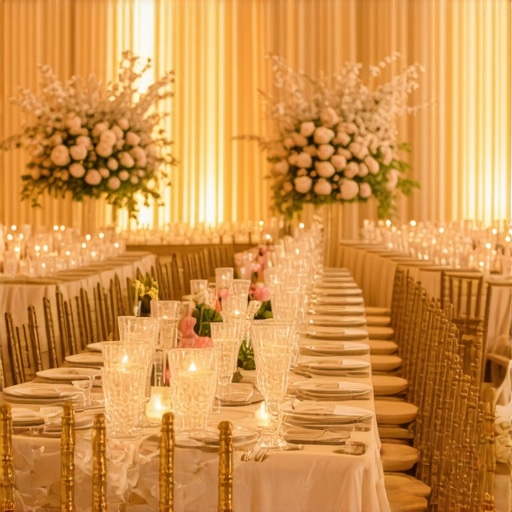
The biggest mistake you can make with a 200-person guest list is treating the floor plan like a grid. If you line up thirty identical tables in a row, you have built a cafeteria, not a celebration of love. Instead, think of your venue as a small village where you want distinct neighborhoods that draw people in. I once worked a wedding in a massive stone cathedral hall where the ceilings were forty feet high and the floor felt like an endless sea of cold tile. To combat the hangar feel, we mixed long banquet tables with smaller squares and rounds. This visual variety breaks the line of sight and forces the eye to settle on smaller, more manageable groups of people. You have to choose a catering style based on your venue size that allows for this kind of movement and architectural interest.
Ditch the Uniformity of the Sea of Rounds
When everyone is seated at a massive 72-inch round, they are physically as far away from each other as possible while still being at the same table. It is an intimacy killer. By incorporating long, narrow feasting tables, you create a family-style energy where guests can actually hear the person across from them without screaming. This is the same logic used in high-end restaurant design—create booths and nooks even in open-concept spaces to make a person feel like the only one in the room.
Give Your Service Team a General for Every Front
In a small wedding of 50, one lead server can see everything. In a wedding of 200, that lead server is blind to half the room. To keep the service feeling personal and small-scale, you need to decentralize the power. This is why your server team needs a designated captain for every 50 guests. These captains act like a concierge for their specific quadrant. They know exactly who has the shellfish allergy and who needs a fresh drink before the guest even has to ask. It turns a massive operation into four smaller, perfectly managed parties.
Speed Up the Start to Stop the Stare
Nothing kills the cozy dinner party vibe faster than 200 people sitting at empty tables for forty minutes while the kitchen tries to catch up. The first ten minutes of the reception are the most dangerous for guest energy. This is why pre-pouring water is the secret to a fast service start. It signals to the guests that they are being taken care of immediately. It is like the bread basket effect in a busy bistro—it buys the kitchen time and keeps the guest’s patience stable while the main courses are staged.
Keep the Kitchen Noise From Crashing Your Party
If you are in a tent or a loft space, the clatter of 200 plates being stacked can sound like a construction site. You need to be hyper-aware of how you keep the kitchen noise from ruining your keynote speech or your emotional toasts. I once saw a beautiful father-of-the-bride speech completely drowned out by a server dropping a rack of silverware behind a thin pipe-and-drape wall. Use heavy velvet draping or strategically placed greenery to create a sound buffer between the magic of the dining room and the machinery of the kitchen.
Run Your Event With Stealth Logistics
To make a massive event feel intimate, the staff needs to be invisible but omnipresent. You cannot achieve that with a skeleton crew or a team that is constantly guessing what comes next. You have to choose the right staffing ratio for a VIP event, which usually means one server for every 10 to 12 guests for a plated meal. Any higher than that, and your servers are sprinting, not serving. Sprinting creates a frantic energy that guests mirror. When a server has the time to walk at a controlled pace and make eye contact, the whole room relaxes. Ensure your server lead needs a copy of the event script so they are never surprised by a sudden toast or a surprise dance. When the staff knows what is coming, the guests feel safe in the flow of the night.
Stop Obsessing Over Infinite Menu Variety
Common wisdom suggests that the more options you provide, the happier your guests will be. I’m here to tell you that this is the fastest way to dilute the quality of your event. When you demand a sprawling menu for 200 people, you aren’t providing luxury; you are creating a logistical bottleneck. A kitchen attempting to execute twelve different proteins simultaneously will never achieve the same precision as one focusing on three high-quality, seasonal dishes. This is why most buffets waste 30 percent of the food produced—not because the guests aren’t hungry, but because the variety leads to ‘decision fatigue’ where guests take a bit of everything and enjoy none of it. I always tell my clients that a curated, intentional menu is a gift to their guests, not a restriction.
Can a 200-person Guest List Survive a Sophisticated Plated Service?
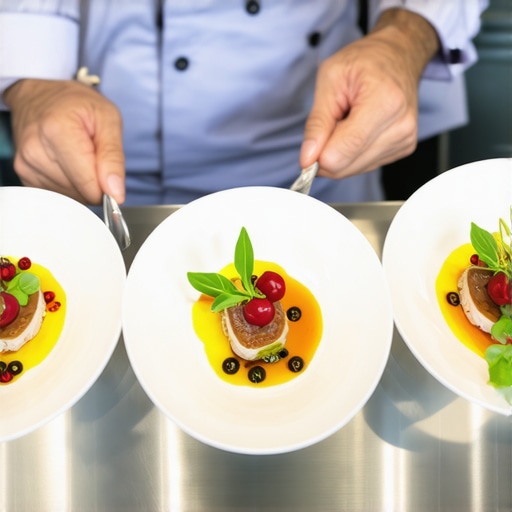
Many planners steer their clients toward buffets the moment the guest count hits the triple digits, fearing that a plated service will be too slow. This is a classic rookie mistake. A plated meal actually provides more control over the room’s energy and timing. However, the nuance lies in the preparation. You cannot simply scale up a 50-person workflow. Research from the International Journal of Hospitality Management indicates that ‘choice overload’ significantly impacts guest satisfaction in high-volume settings, meaning a simplified, perfectly executed plated menu often outscores a complex buffet in guest feedback. To pull this off, you must brief your server team on complex dietary restrictions in minutes to ensure no one is left waiting while the kitchen double-checks ingredients.
Don’t Let a ‘Skeleton Crew’ Masquerade as Luxury
The biggest ‘trap’ I see in large-scale catering is the hidden use of subcontracted, untrained labor. Many companies will promise you a premium experience but then hire ‘warm bodies’ from a general temp agency to fill the gaps for a 200-person event. You need to know how to spot a fake luxury server team before they ruin your gala. A professional server doesn’t just carry a plate; they read the room. If your servers look frantic, your guests will feel frantic. This is why I insist on wedding catering tips from industry experts who emphasize staff-to-guest ratios that allow for actual hospitality, not just food delivery. If the server doesn’t know the difference between a Pinot Noir and a Cabernet without looking at the bottle, the ‘luxury’ facade has already crumbled.
The Danger of the Moving Target
Finally, let’s talk about the ‘headcount creep.’ I’ve watched many hosts try to squeeze in ‘just five more’ guests a week before the event. This isn’t just an accounting issue; it’s a physics issue. Tables get pushed closer together, the kitchen’s prep space shrinks, and the server-to-guest ratio is thrown into chaos. It is the single most effective way to turn a well-oiled machine into a disaster. This is why your catering contract needs a firm headcount deadline that you actually stick to. Have you ever fallen into the ‘more is better’ trap only to have it backfire on the big day? Let me know in the comments—I’d love to hear how you handled the logistics of a growing guest list.
Even with the best plan in the world, things will go sideways if you are still relying on a three-ring binder and a prayer. I’ve moved entirely to digital synchronization because nothing feels worse than a server offering a steak to a guest who just updated their profile to vegan ten minutes ago. Managing corporate event catering logistics requires real-time data accuracy that paper simply can’t provide. I personally use tablets for every section captain that sync back to my command center laptop. This isn’t just about being tech-savvy; it’s about optimizing server efficiency so they never have to walk back to the kitchen just to ask a simple question. Every time a server has to leave the floor, the guest loses that sense of being cared for. According to Kevin Howard, a veteran event safety and logistics consultant, the synchronization of back-of-house data with front-of-house execution is the only way to mitigate the fog of war that happens during 200-plus person services. This level of oversight is essential when scaling from a small gathering to a massive gala. 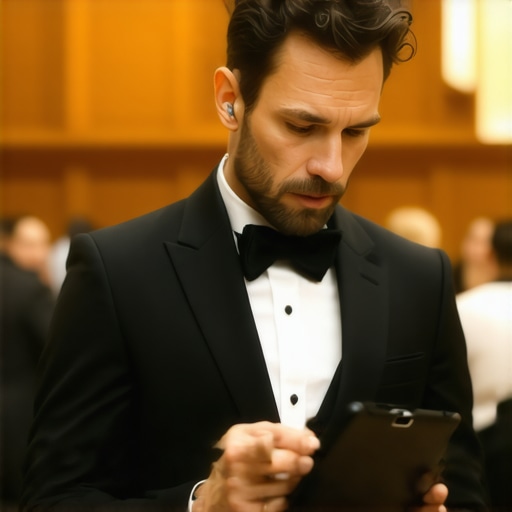
Give your captains the gift of silent communication
In my early years, I spent half the night running across ballrooms to whisper instructions. It looked frantic and unprofessional, and honestly, it stressed the guests out to see the coordinator sprinting. Now, I insist on discrete comms for the lead team. We use high-quality, in-ear headsets that allow us to coordinate the exact moment the salads are cleared without a single guest hearing a word of it. This is how you implement strategies for success that feel like magic to the client. You can even use these to organize a staff meeting on the fly if the timeline shifts by fifteen minutes or if a speech runs long. It allows the kitchen to hold the mains for five extra minutes without a single frantic hand signal across the room.
How do I maintain consistent quality over a long season?
The secret to long-term results isn’t in the event itself, but in the Post-Mortem report. After every wedding or gala, I sit with my captains for twenty minutes to document exactly where the bottleneck was. Was the service entrance too narrow for two trays to pass? Was the lighting too dim for servers to read the seat numbers? By building a database of these micro-failures, you ensure they never happen again. This long-term mindset is one of the top server tips to elevate your event experience over many years. It transforms a one-off success into a repeatable, high-standard process that clients can trust.
Look toward a more predictive future for events
We are moving toward a world where AI doesn’t just track who has a peanut allergy but actually predicts when the bar queue will get too long based on real-time guest movement data. I expect to see thermal heatmapping in venues within the next five years to help us adjust floor plans on the fly to avoid clogs in the flow. For now, my challenge to you is this: Ditch the paper BEOs for your next event and try a shared digital document with your lead server. It takes some setup, but the clarity it provides is a game-changer for your sanity and your guests’ overall experience. Stop being the person with the clipboard and start being the person with the vision.
What I Finally Realized About the 200-Guest Threshold
After years of managing high-stakes celebrations, I’ve found that the most important lessons aren’t found in a textbook. Here is what actually moves the needle when you are trying to keep things cozy even with a massive crowd:
- The Couple Is the Thermostat: If you spend the night running around worried about the timeline, your guests will mirror that frantic energy. Your job is to be present; our job is to manage the corporate event catering strategies for success behind the scenes.
- Lighting Is Your Best Friend: You can turn a gymnasium into a sanctuary just by killing the overhead fluorescents and using amber uplighting and low-flicker candles. It draws the guest’s eye inward to the table, making the rest of the room disappear.
- The Power of the ‘Small Talk’ Buffer: I always build in a ten-minute ‘cushion’ after the first course is cleared. This allows the room to buzz and guests to swap seats without servers interrupting the flow of a great conversation.
The Gear That Keeps My Sanity Intact
If you want to pull off a seamless 200-person service, you need more than just a good attitude. These are the specific resources I rely on to keep every plate and person moving like clockwork. First, I never start a layout without Social Tables; it allows me to visualize those ‘neighborhoods’ I mentioned earlier and ensure we have that crucial three-foot safety buffer for the staff. Second, I trust Motorola in-ear headsets for my lead team. It is how we coordinate the ‘silent clear’ of 200 plates simultaneously without a single shout. Finally, I always keep a copy of my own ‘Service Standards’ guide on hand. It contains top server tips to elevate your event experience that I’ve curated over a decade, ensuring every hire knows exactly how to read a guest’s body language before they even approach the table.
Trust the Process and Enjoy the Party
At the end of the day, a 200-person guest list is just a collection of individuals who want to celebrate with you. By focusing on optimizing server efficiency and prioritizing human connection over rigid cafeteria-style grids, you create an environment where magic can actually happen. Don’t be afraid of the numbers; embrace the energy they bring to the room. Whether you are planning a corporate gala or looking for unforgettable wedding catering ideas, the key is always in the heart of the service. Have you ever been to a large wedding that still managed to feel like a cozy, private dinner party? Let me know in the comments below what the hosts did to make you feel special!