

I was sitting at a $500-a-plate charity auction last fall when I saw it—the cardinal sin of high-end dining. A server, well-meaning but clearly out of his depth, reached across a donor’s face to snag a bread plate while she was mid-sentence. The flow of the conversation died instantly. The elegance of the room? Gone. That’s the thing about French service; it’s a silent, synchronized dance that is nearly impossible to fake. When you are paying for a premium experience, you aren’t just paying for the wagyu; you’re paying for the invisible choreography. Today, I’m going to show you exactly how to see through the white gloves and identify when a catering team is just winging it, saving you from a potential hospitality disaster.
Don’t let a clumsy reach ruin your high-end menu
I’ve been in the trenches of event planning for years, and I’ll be the first to admit I’ve made mistakes. Early in my career, I thought hiring ‘enthusiastic’ staff was enough. I learned the hard way that enthusiasm doesn’t replace the technical discipline of silver service. If you’re currently vetting a team, you need to know how to spot a fake luxury server team before the first course is even served. Genuine French service requires the server to present the platter from the guest’s left, allowing the guest to serve themselves, or for the server to expertly plate the food using a fork and spoon as tongs. If you see a server hovering with a tray or looking unsure of which side to approach from, the illusion is already broken. You need to elevate your wedding with professional servers who understand that their movements should be felt, not heard. Have you ever felt the awkwardness of a server intruding on a private toast because they didn’t know the proper clearing sequence?
Is this level of formality actually worth the hype?
Many hosts wonder if ‘white glove’ standards are just an old-fashioned headache. However, data suggests otherwise. According to the Cornell School of Hotel Administration, the physical delivery of service accounts for over 40% of a guest’s perceived value of a meal, often carrying more weight than the actual taste of the food. This is why why white glove service is making a comeback in the modern era; people crave the ritual. When a server hasn’t been trained, they lack ‘the eye’—that ability to anticipate a guest’s needs before the guest even knows they have them. If they aren’t scanning the table for crumbs or misaligned cutlery, they aren’t doing French service. They’re just delivering food. In the following sections, I’ll break down the specific ‘tells’ of an untrained server, from their grip on the silver platter to the way they handle a wine pour.
Spot the technical flaws before your guests do
The difference between a luxury event and a standard banquet isn’t just the price tag; it is the physical mechanics of the people in the room. When you are evaluating a team, you need to look for what I call ‘the invisible hand.’ A truly elite server moves through the room like a ghost—unseen but deeply felt. If you start noticing the staff more than the conversation, something is fundamentally wrong with the training. Most teams fail because they lack technical discipline in the most basic movements. To ensure your event runs smoothly, you should focus on top server tips to elevate your event experience which emphasize the quiet precision required for high-end dining.
The fork and spoon tongs are non-negotiable
In authentic French service, the use of a fork and spoon together as a pair of tongs is the ultimate litmus test. If you see a server reaching for a set of metal kitchen tongs to serve a delicate piece of sea bass, the illusion of luxury is dead. They should be able to manipulate those two pieces of silver with one hand to plate everything from micro-greens to heavy proteins. I remember a high-stakes fundraiser in 2018 where a junior server tried to ‘stab’ a roasted potato because he couldn’t master the grip. The potato skittered across the table and landed in a donor’s lap. It was a mess that could have been avoided if the captain had verified the team’s technical skills beforehand. This is why why your server team needs a clear chain of command on-site to catch these technical gaps before they reach the dining room. 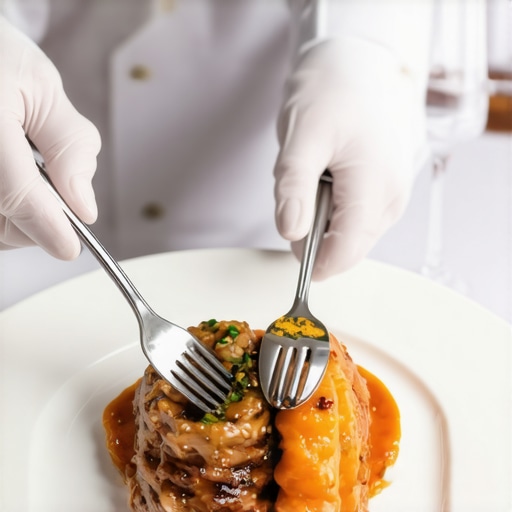
Watch the clearing sequence like a hawk
Nothing kills the momentum of a keynote speech or a heartfelt toast faster than the clinking of china. An amateur team will try to clear plates whenever they see an empty one, often interrupting the flow of the program. You must know how to handle plate clearing during a seated executive presentation to maintain the professional atmosphere. The golden rule is simple: plates should be cleared silently and only when everyone at the table has finished, unless otherwise instructed. Furthermore, you must how to prevent plate stacking at high-end charity auctions; a server should never carry more than two or three plates at a time, and they should absolutely never stack them in front of a guest. It’s loud, it’s unsightly, and it reeks of a ‘get it done’ attitude rather than a ‘serve with grace’ philosophy.
Anticipating needs without being asked
The final ‘tell’ of a professional team is their ability to read the table. Are they noticing the guest who is squinting at the menu and offering more light? Are they seeing the guest who has pushed their onions to the side and discreetly checking if there is an undisclosed allergy? A lead captain should know how to brief your server team on complex dietary restrictions in minutes so that no guest ever has to explain their needs twice. This level of anticipation is what separates a food runner from a hospitality professional. If your servers are waiting for guests to wave them down for a water refill, they’ve already failed the test.It’s easy to get swept up in the glamour of a white-glove setup, but let me pull back the curtain on a hard truth: many hosts mistake ‘more people’ for ‘better service.’ I’ve walked into ballrooms where the client doubled the staff count thinking it would guarantee perfection, only to find the dining floor looking like a crowded subway station at rush hour. Bloated teams without a rigid structure lead to ‘server clustering’—that awkward phenomenon where servers group together to chat rather than watching their tables. This is exactly why your server team needs a designated captain for every 50 guests. Without that middle management, the ‘silent dance’ we talked about becomes a clumsy stumble. Even when calculating the math behind hiring extra servers for a flowing champagne reception, remember that more bodies require more brains to coordinate them.
Stop letting cold porcelain ruin your premium menu
The biggest ‘oops’ factor I see at high-end galas isn’t a spilled drink—it’s the temperature of the food. It’s a tragedy to spend top dollar on a premium cut of beef only to have it served at room temperature because the logistics failed. In my experience, why cold plates are the enemy of a perfect filet mignon is the most overlooked technical detail in the industry. If the porcelain isn’t pre-warmed, it acts as a heat sink, dragging the internal temperature of the meat down before it even hits the table. Optimizing server efficiency to enhance event satisfaction means the team must have a ‘hot-to-guest’ window of less than three minutes.
Why does your floor plan dictate the kitchen’s success?
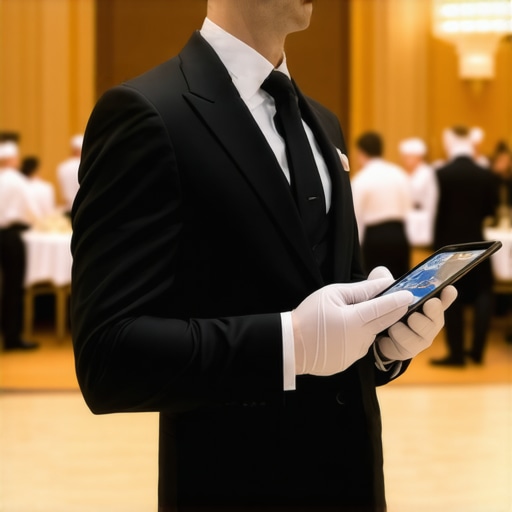
Most planners focus on how a room looks on social media, but they forget that the server’s path is the kitchen’s lifeline. Experts from the International Live Events Association (ILEA) note that every extra ten yards of travel for a server increases the risk of service delays and temperature loss by significant margins. When the layout is a labyrinth, the logistics of running a 3-course dinner for 800 people become nearly impossible to manage silently. This is a primary reason why your event floor plan needs wider aisles for mobility access—it’s not just for the guests, but to ensure the staff doesn’t have to perform a high-wire act just to deliver a tray. 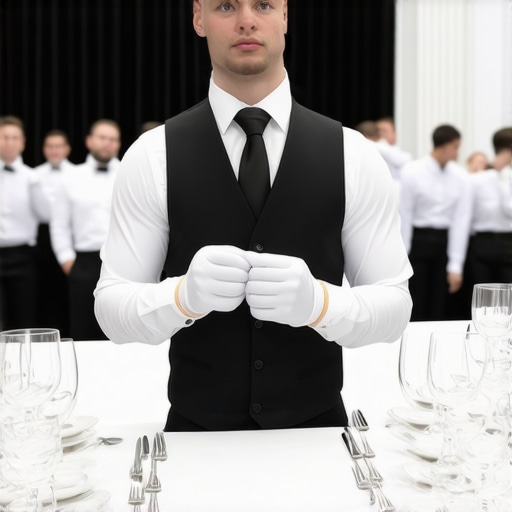 Have you ever fallen into this trap where a ‘beautiful’ layout actually ruined the flow of your meal? Let me know in the comments.It’s one thing to run a perfect service once; it’s another to do it fifty weekends a year. To keep my sanity and my reputation, I’ve moved away from paper checklists to a high-fidelity digital ecosystem. I personally swear by integrated event management software for real-time floor plan adjustments because it allows me to sync with the kitchen lead instantly. If a guest moves their chair or a VIP table is relocated, the entire team sees it on their devices in seconds. But the tech is only as good as the hardware behind it. For those massive gala events, I rely on humidity-controlled warming cabinets. Why? Because the North American Association of Food Equipment Manufacturers (NAFEM) notes that moisture loss in proteins begins within six minutes of plating if not held in a precise environment. If your gear doesn’t compensate for that, your wagyu becomes leather. You need to master the ultimate guide to corporate event catering logistics to ensure your tech stack matches your menu’s ambition.
How do I keep these standards from slipping over time?
Consistency is the graveyard of most catering companies. You hire a great lead, they move on, and suddenly your white glove service looks like a cafeteria line. I’ve found that the only way to scale is through a modular training system that treats every event like a performance review. Every month, we run a technical audit. I’ll intentionally misalign a fork or leave a water glass three-quarters empty to see if the team catches it. You should learn how to train temporary server staff on high-end table manners as if they are permanent hires, because to the guest, there is no distinction. Using an essential checklist for successful corporate event catering is mandatory, but the secret is in the pre-shift ritual. We spend 15 minutes on server skills that make every event stand out, focusing on eye contact and the pivot—the art of a server turning away from a table without ever turning their back on a guest. It’s about optimizing server efficiency to enhance event satisfaction through muscle memory, not just a manual. Looking ahead, I predict we’re moving toward haptic-feedback wearables for server training, where staff can receive silent vibrations to alert them of empty glasses or service delays. For now, focus on the fundamentals. Try this today: Ask your catering manager to demonstrate a two-handed wine pour with a linen wrap. If they hesitate, you know you need to dig deeper into their training protocols before your big day.
The Hard Truths I Learned While Managing Elite Dining Teams
Reflecting on years of high-pressure galas and intimate executive dinners, I’ve realized that even the most expensive floral arrangements cannot mask a team that lacks technical discipline. My journey through the world of hospitality has taught me a few non-negotiable lessons that every host should keep in their back pocket. First, a server’s uniform is only as professional as their posture; if they don’t carry themselves with pride, they won’t carry a tray with grace. Second, silence is the ultimate luxury. If your guests can hear the clinking of plates or the chatter of the staff, the curated atmosphere is compromised. Finally, I’ve learned that the ‘pivot’—the ability to move away from a table without ever turning one’s back on a guest—is the hardest skill to teach but the most important for maintaining a feeling of exclusivity. When you hire the best corporate event servers for 2025, you aren’t just paying for labor; you are paying for this level of situational awareness.
The Essential Toolkit for Masterful Event Logistics
To keep my standards from slipping, I rely on a specific ecosystem of tools and resources that ensure every plate is hot and every movement is synchronized. I always recommend that planners review wedding catering tips from industry experts to understand how to handle the inevitable chaos of a changing guest count. For technical standards, I follow the NAFEM guidelines for food safety and temperature control religiously. I also swear by real-time digital floor plans that allow my captains to communicate table shifts instantly. Most importantly, I constantly refresh my team’s training by focusing on server skills that make every event stand out, ensuring that the ‘invisible hand’ of service remains steady under pressure.
Take the Lead on Your Next High-Stakes Event
Providing a world-class dining experience isn’t about hoping for the best; it’s about the relentless pursuit of technical excellence. By paying attention to the mechanics of the floor, you protect the integrity of your menu and the comfort of your guests. When you boost your corporate event with expert server techniques, you transform a standard dinner into a legendary performance that people will talk about for years. You now have the eye to spot the pretenders—use it to ensure your next event is nothing short of perfection. Have you ever had a beautiful meal ruined by a clumsy service mistake? Let me know your experiences in the comments below!