

I still remember the silence. It wasn’t a respectful, awe-inspired quiet; it was the heavy, suffocating stillness of fifty senior executives being told they had to participate in a mandatory beatboxing workshop while their sea bass sat growing a skin under the heat lamps. I was the one who booked it. I was the one who thought interactivity was the magic word that would save a dry quarterly review. Watching the CEO’s face turn a shade of magenta I’d previously only seen on a sunset, I realized I hadn’t planned a highlight; I’d planned a hostage situation. We’ve all been there, haven’t we? The moment when the fun feels like a chore. Today, I want to show you how to break that cycle. We’re going to look at how to select entertainment that feels like it belongs in the room, rather than being bolted onto the schedule as an afterthought. [placeholder]
Stop Treating Your Guests Like a Captive Audience
The biggest mistake I see—and one I’ve made more times than I care to admit—is failing to match the energy of the room with the talent on stage. If you’ve spent months mastering corporate event planning secrets to seamless success, you know that every element needs to breathe. When you force a high-energy comedy set onto a crowd that just wants to talk shop over a cocktail, you create friction. Instead, the goal is to weave the entertainment into the existing vibe. You want people to notice the music or the performance and think, ‘Oh, that’s a nice touch,’ rather than ‘When will this end?’ I’ve found that the best results come when you focus on effective catering strategies for corporate event impressiveness that complement the entertainment. If people are eating standing up, don’t give them a 45-minute stage show that requires sitting still.
Is professional entertainment actually worth the investment?
Skepticism is healthy here. I get asked all the time if it’s safer to just play a curated playlist and hope for the best. But here is the thing: silence is expensive. Without a focal point, guests often feel adrift. However, you don’t need a circus act to keep people engaged. I once tried to save money by hiring a student jazz quartet for a high-stakes board dinner, only to find they didn’t know how to read the room. They played complex, loud bebop while the chairman was trying to announce a merger. It was a disaster. Since then, I’ve learned that a true professional knows when to be the star and when to be the wallpaper. Research from the University of Oxford’s Department of Experimental Psychology suggests that shared musical experiences can increase social bonding, but only when the experience is perceived as a choice rather than a mandate. This is why you need to learn how to coordinate a surprise performance without tipping off the guests so it feels like a discovery, not a demand. Have you ever felt that ‘forced fun’ cringe at a work event? I’d love to hear about the moment you knew the entertainment had gone off the rails. To avoid these pitfalls, we need to look at the logistics of the space, such as why round tables kill the energy at corporate networking mixers, making it even harder for any performer to bridge the gap between the stage and the audience.
Master the Invisible Mechanics of Performance
To move from a ‘hostage situation’ to the highlight of the year, you have to think like a technician before you think like a fan. It starts with the physics of the room. I once booked a high-end string quartet for a gala in a renovated warehouse, thinking the industrial chic vibe would be perfect. I was wrong. The exposed brick and thirty-foot metal ceilings turned Mozart into a chaotic echo chamber that made guests physically uncomfortable. If you don’t learn how to balance the acoustics of a crowded cocktail hour, your entertainment is just expensive noise. You have to treat the venue like an instrument that needs tuning. 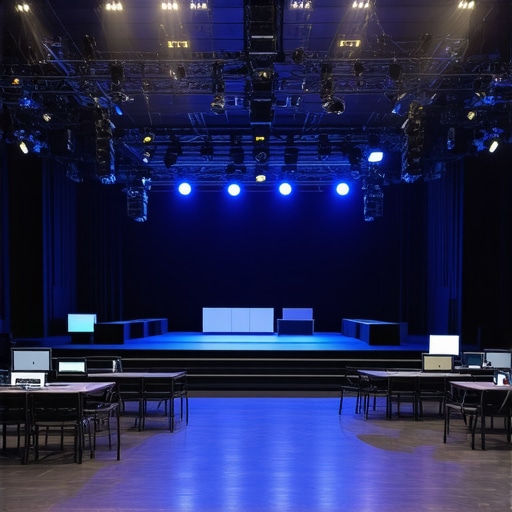
Stop Your Band From Sounding Like a Muffled Mess
Whether you are in a ballroom or a marquee, the surface materials dictate your success. Fabric absorbs sound, while glass and stone bounce it. This is specifically the reason your wedding band sounds muffled in a tent; the vinyl walls kill the high frequencies while the low-end bass rumbles uncontrollably. To fix this, use pipe and drape to soften hard corners or add area rugs under the band. It is the difference between a wall of sound and a crisp, professional performance.
Why Wireless Mics Fail at Tech Conferences
Don’t let a plug and play mentality ruin your keynote. I have seen CEOs silenced because the AV team didn’t account for 500 guests all using the venue’s Wi-Fi simultaneously. You need to be aware of the hidden risks of using wireless microphones near heavy wi-fi usage. Always insist on a dedicated frequency band for your performers and have a wired backup at the lectern. If the band is large, pay close attention to the logistics of moving a 10-piece band onto a small stage. Cramping musicians ruins their range of motion and their morale, which translates directly to the energy they project.
Sync the Kitchen Timings With the Setlist
The greatest magic trick in event planning is making the service invisible. This requires a church-state separation between the kitchen and the stage. You must learn how to keep the kitchen noise from ruining your keynote speech by scheduling heavy plate-clearing only during high-energy musical numbers, never during a quiet solo or a speech. Furthermore, why your corporate stage needs a professional lighting designer becomes clear the moment the main course is served; you need to transition from business-bright to dinner-warm without the guests consciously noticing the shift. If the servers and the performers are not working from the same minute-by-minute run of show document, you are not running an event—you are managing a collision.But even if the timing is perfect, I see planners fall for a common myth: the belief that the venue manager is your primary advocate. Let’s be clear: they represent the building, not your specific vision. This is exactly why your venue manager should not be your day-of-coordinator. While you are focused on the guest experience, they are focused on the HVAC and the fire exits. To truly elevate the evening, you need someone whose only loyalty is to the flow of the event.
Can you actually serve a five-star meal without a kitchen?
Planners often shy away from unique spaces because they lack infrastructure, but the ‘nuance’ here is that elite service is mobile. I’ve seen teams pull off the impossible by learning how to serve a hot meal in a venue without a kitchen, using satellite prep zones and specialized thermal transport. However, the ‘Oops’ factor often comes from over-complicating the menu in these settings. For instance, the problem with serving steak at a 500-person business lunch is that consistency dies at scale when equipment is limited. You end up with 100 perfectly cooked fillets and 400 hockey pucks. 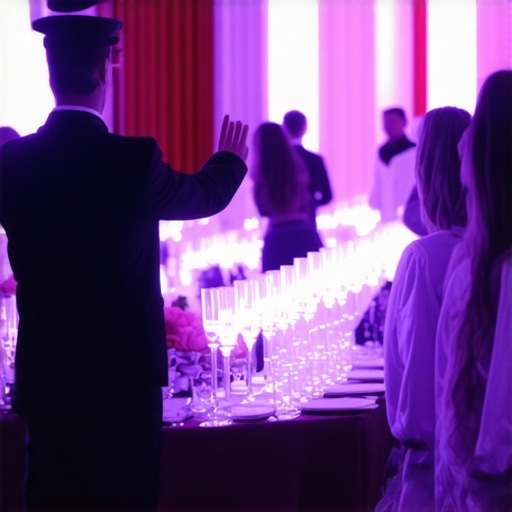
Avoid the Staff Clutter Trap With a Clear Hierarchy
There is a dangerous contrarian view in our industry that more staff always equals better service. In reality, too many bodies in the room create ‘visual noise’ and physical bottlenecks. According to a study by the Cornell School of Hotel Administration, guest satisfaction in luxury settings is more highly correlated with the *precision* of staff movement than the *density* of staff presence. This is why your server team needs a clear chain of command on-site. Without a hierarchy, you get the ‘everyone is watching, but no one is acting’ syndrome. I always look for the hidden benefit of hiring a lead server for every ten guests to ensure that every table feels like it has a dedicated concierge, rather than just a food runner. This structure is the only way to effectively how to prevent plate stacking at high-end charity auctions—a rookie mistake that turns a black-tie gala into a cafeteria within minutes. Have you ever fallen into this trap where the ‘help’ actually hindered the vibe? Let me know in the comments below.
The Gear That Separates Pros from Amateurs
I’ve spent a decade refining the kit I carry to every gala and wedding, and I have learned that the difference between a smooth evening and a logistical nightmare usually comes down to the hardware you can’t see. For me, the game-changer was moving away from consumer-grade communication. When you are trying to coordinate a synchronized service for 500 people, static is your enemy. I now swear by digital frequency-hopping radios. I use them because they pierce through the interference of a thousand mobile phones and the thick marble walls of historic venues. If you want to see a real jump in performance, you need to be optimizing server efficiency to enhance event satisfaction by giving your team the tools to communicate without shouting across a crowded ballroom. This isn’t just about ‘staying in touch’; it’s about the millisecond-perfect timing required to drop every plate at the same moment. 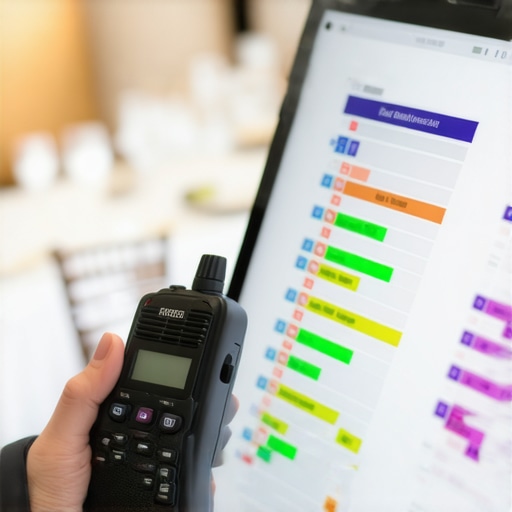
Your Digital Run-of-Show Is a Living Document
I’ve seen planners try to run a complex evening off a crumpled piece of paper, and it makes my skin crawl. In my personal workflow, I use cloud-based, real-time collaboration tools that every lead staffer can access on their tablet. If the keynote runs five minutes long, I update the kitchen immediately. This level of synchronization is essential for things like boost your corporate event with expert server techniques, where the staff needs to adjust their pace on the fly. You also have to be firm about the schedule; for example, why your corporate lunch needs a clear end time for the catering staff becomes a hard reality when you are paying overtime for thirty people because a presentation dragged on. Precision isn’t just professional—it’s profitable.
How do I keep the standards high as the guest list grows?
Scaling is the ultimate test of your systems. When you move from an intimate dinner to a 1,000-person conference, your biggest risk is the ‘dilution of quality.’ I maintain consistency by treating my temporary hires like seasoned pros from the start, often showing them how to train temporary server staff on high-end table manners within the first ten minutes of their briefing. According to the International Live Events Association (ILEA), technical redundancy—having a ‘Plan B’ for every signal chain and service step—is the number one factor in preventing catastrophic event failure. I apply this to everything from microphone frequencies to backup coffee machines. Looking ahead, I predict that AI-driven guest-flow analysis will soon be a standard part of vetting the 5 questions to ask before booking a rooftop corporate space, allowing us to simulate bottlenecks before the first guest even arrives. My challenge to you: next time you are on-site, audit your team’s radio protocol—if it takes more than three seconds for a lead to get an answer, your communication infrastructure is failing you. Fix that first.
The Uncomfortable Truths About High-Stakes Hospitality
After a decade in the trenches, I’ve realized that the ‘perfect’ event isn’t one where nothing goes wrong; it’s one where the guests never see the frantic paddling beneath the surface. One of my biggest lightbulb moments was realizing that silence from the kitchen is just as important as the music on stage. If the staff isn’t synchronized, the friction becomes palpable. I’ve learned that trusting your gut when vetting a team is vital; if they can’t explain their chain of command in thirty seconds, they’ll crumble when the CEO decides to skip his intro. This is why top server tips to elevate your event experience often focus on the invisible prep work rather than just the public-facing polish.
Another hard lesson: technical redundancy isn’t just for the AV team; it’s for hospitality too. I always keep a ‘shadow’ server in the wings during VIP service, ready to step in if a glass breaks or a guest has a surprise allergy. This level of foresight is what separates a standard caterer from a true partner in your corporate event catering strategies for success.
The Toolkit That Keeps Me Sane On-Site
I don’t leave for a venue without a few non-negotiables. First, I rely on digital frequency-hopping radios because standard walkie-talkies are useless in a crowded marble ballroom. Second, I always carry a printed ‘Master Friction Map’—a floor plan where I’ve highlighted every potential bottleneck, from the coat check to the buffet lines. To stay ahead of the curve, I regularly consult the essential checklist for successful corporate event catering to ensure my logistical base is covered.
For those looking to dive deeper into the psychology of the evening, I highly recommend reading up on the latest wedding catering tips from industry experts, as the high-pressure environment of a wedding often breeds the best innovations for corporate settings. When you combine that philosophy with the best corporate event servers for 2025, you stop just ‘running an event’ and start hosting an experience that resonates.
Your Reputation Is Built in the Transitions
At the end of the day, your success as a planner isn’t measured by the height of the floral arrangements, but by the seamlessness of the transitions. Whether you are managing a high-stakes board dinner or a thousand-person gala, the principles remain the same: communicate clearly, trust your systems, and never stop reading the room. You have the tools to turn a potential ‘hostage situation’ into a legendary highlight. Go out there and create something that people will talk about for the right reasons. Have you ever witnessed a corporate event that felt more like a chore than a celebration? What was the one detail that could have saved it? Let me know in the comments below!