

I was standing at the back of a ballroom for a 500-person charity gala, sweating through my blazer, watching the CEO tap a dead microphone while the house lights stayed stubbornly bright. It was painful. I had spent six months obsessing over the corporate event catering strategies for success and the flower arrangements, but I had completely neglected the show itself. In that moment, I realized that a beautiful room means nothing if the execution feels like a middle school talent show. I made the classic mistake of thinking I could be the planner and the director simultaneously. Spoiler alert: You cannot.
The Crucial Difference Between Planning and Producing
Most of us think that if we have booked the venue and the band, the rest just falls into place. I used to believe that too. But there is a massive gap between having a schedule and actually calling the shots in real-time. A planner builds the car; a stage manager is the professional driver who knows exactly when to shift gears so the engine does not blow. When you are mastering corporate event planning secrets to seamless success, you eventually learn that you cannot be at the front door greeting VIPs while also telling the AV tech to fade the music for the keynote speaker. You need someone whose only job is to watch the clock and the stage.
Is a Stage Manager Actually Worth the Extra Expense?
You are probably looking at your budget and wondering if this is just another nice-to-have line item. I get it. Every dollar counts. However, consider this: the Event Industry Council notes that technical failures and poor transitions are among the primary reasons guests report a negative perception of a corporate brand during a live event. If your high-stakes gala is derailed by a feedback loop or a missed cue, the savings of skipping a pro suddenly feel very expensive. It is about more than just lights; it is about protecting your reputation from a preventable glitch.
Why Your Gala Needs a Script Not Just an Agenda
A simple timeline is great for the caterers, but it is useless for the tech booth. When I started out, I would give the DJ a list of names and hope for the best. That was a disaster waiting to happen. Now, I know that why your gala needs a stage manager instead of a wedding planner comes down to the Run of Show. This is a minute-by-minute breakdown where every light change, every mic hand-off, and every video clip is choreographed like a Broadway play. Have you ever sat through a corporate event where the transition between speakers felt like an eternity? I would love to hear about the most awkward moment you have witnessed at a gala. [IMAGE_PLACEHOLDER] To keep your guests from checking their watches, you have to treat the stage like a professional broadcast.
Master the Art of the Minute-by-Minute
To move from a chaotic evening to a polished production, you have to stop thinking about what happens and start thinking about when it happens. I once managed a high-stakes fundraiser where the keynote speaker accidentally skipped two pages of his speech. Because we didn’t have a shared document that every technician could see, the video team stayed on a static slide for five minutes while he talked about a completely different topic. It was a train wreck. That is why you need a Run of Show (ROS) that acts as the heartbeat of the room. This document isn’t just for the AV crew; it is for everyone, including the kitchen. When you are managing the logistics of running a 3-course dinner for 800 people, the catering lead needs to know exactly when the ‘God Voice’ will announce the next segment so the soup doesn’t go cold in the wings.
Build a Script That Technicians Can Actually Follow
Your agenda might say ‘Dinner: 7:00 PM,’ but your production script needs to say ‘7:03:15: Fade house lights to 30%, cue walk-in music track 4, servers enter stage left.’ This level of detail prevents the awkward dead air that kills the momentum of an evening. I treat every gala like a live television broadcast. If a speaker goes long, the stage manager is the one who makes the executive call to delay the entrée. Without that single point of contact, you end up with servers clearing plates while the CEO is trying to deliver a heartfelt closing. To avoid this, you must learn optimizing server efficiency to enhance event satisfaction by ensuring the banquet captain is on a headset.
Sync Your Servers with the Stage Lights
Nothing kills a professional atmosphere faster than a server dropping a tray in the middle of a moment of silence. I remember a gala in a cavernous ballroom where the lighting was so dim for a memorial video that the servers couldn’t see the table numbers. It was total chaos. Now, I work with the client to ensure why your corporate stage needs a professional lighting designer who understands the ‘service light’ concept—keeping enough amber glow on the floor so the team can work without distracting from the screen. 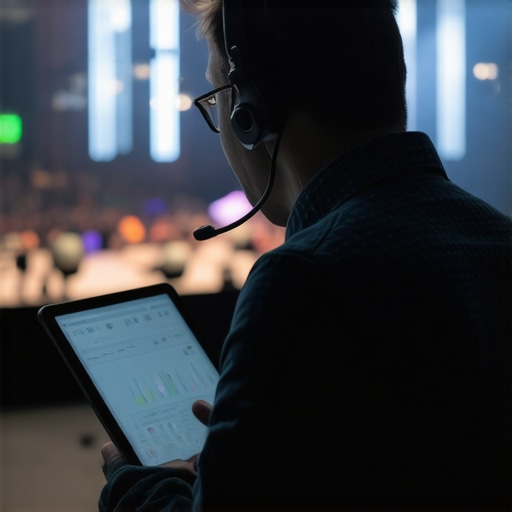
The Silent Language of the Headset
The ‘call’ is where the magic happens. The stage manager sits at the ‘Command Center’ (usually a table in the back or side of the room) and speaks to the lighting, sound, and catering leads simultaneously. This ensures that when the speaker says ‘And now, look at the screen,’ the video actually plays. This coordination extends to the fine details of hospitality. For example, knowing how to brief your server team on complex dietary restrictions in minutes is vital, but it’s the stage manager who tells those servers when it is safe to enter the floor. I always advocate for the hidden benefit of hiring a lead server for every ten guests because it creates a decentralized command structure that can react instantly to the stage manager’s cues. Even the best tech can fail, which is why every CEO keynote needs a teleprompter backup plan. A professional manager has that plan ready before the first guest even walks through the door.
Round Tables Might Be Killing Your Networking Vibe
Most planners default to the standard 72-inch round table because it looks traditional, but in my experience, it is the quickest way to stifle conversation. You are essentially locking eight people into a silo where they can only talk to the person on their immediate left or right. I have found that why round tables are killing the vibe at your networking event is a matter of physical barriers. When I switched a recent corporate client to long, communal ‘king’ tables, the interaction rate skyrocketed. Guests feel less ‘trapped’ and are more likely to lean across to talk to a wider range of people. Research from the Cornell School of Hotel Administration suggests that physical environment—specifically table shape and proximity—directly correlates to the perceived ‘social density’ and success of a networking function. 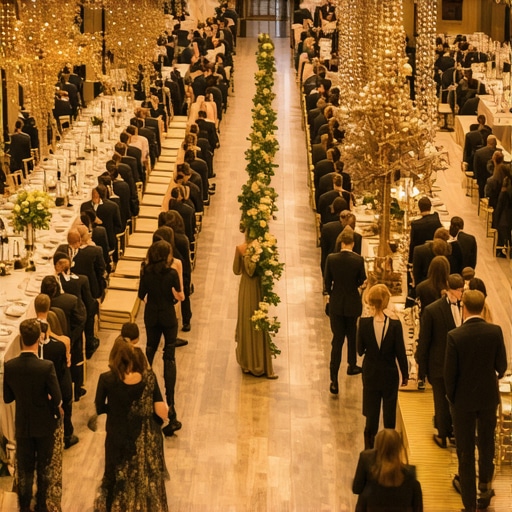
The One Menu Item That Can Sink Your Entire Gala
Everyone wants to impress their board with a perfectly seared filet mignon. It sounds prestigious on the invitation, but the problem with serving steak at a 500-person business lunch or gala is the brutal reality of logistics. If you have fifty tables, the first table receives a hot, medium-rare steak, while the last table gets a piece of meat that has been sitting in a hot box for forty minutes, slowly turning into shoe leather. To maintain an elite reputation, I often steer clients toward sophisticated braised short ribs or sustainable fish options that hold temperature and moisture far better under pressure. It is a classic ‘oops’ factor where the desire for prestige outweighs the reality of the kitchen’s output.
How Do You Maintain Luxury When Scaling to a Thousand Guests?
It is the ‘Law of Large Numbers.’ Once you cross the 500-guest threshold, the perceived quality of service often drops because the staff-to-guest ratio is stretched thin. This is why white glove service is making a comeback in luxury galas. It isn’t just about the aesthetics of the gloves; it is about the discipline it requires. It forces a synchronized, high-speed delivery system that ensures every guest at a table is served at the exact same second. This prevents the awkward ‘should I start eating yet?’ shuffle that kills the flow of a formal evening. To pull this off, you have to avoid the hidden risks of hiring student servers for high-end events. You need veterans who understand the silent cues of the room.
Spotting the Difference Between a Server and a True Professional
I have seen beautiful events tarnished because the staff didn’t know the basics of elite hospitality. You need to know how to spot a server who has not been trained in French service before they make a mistake like clearing a plate from the wrong side during a sensitive keynote. A professional server moves like a ghost; they are present when needed and invisible when the focus should be on the stage. If you see a server leaning against a pillar or checking their phone in the back of the room, your production is already in trouble. Have you ever fallen into the trap of prioritizing a ‘fancy’ menu over the reality of service logistics? Let me know in the comments.To move from being a ‘planner’ to a ‘producer,’ you need to invest in a real-time collaborative script tool. I personally swear by platforms like Shoflo. In the old days, I’d print fifty copies of a PDF, only for a speaker to change their intro three minutes before doors. With a digital Run of Show, I can update a cue on my tablet and it instantly turns red on the teleprompter op’s screen and the catering lead’s phone. This is the backbone of the ultimate guide to corporate event catering logistics. If you aren’t using a shared, living document, you’re essentially playing a game of telephone with a massive budget.
The Gear That Separates Amateurs from Pros
You’ll never see me at a high-stakes event without a Hollyland or Clear-Com headset system. Why? Because the ‘shout and point’ method fails the moment the music hits 85 decibels. According to the Event Safety Alliance (ESA) in their Event Safety Guide, maintaining a dedicated, non-interrupted communication channel is not just a luxury for coordination; it is a fundamental safety requirement for large-scale crowd management. It allows me to whisper to the back-of-house that we need to serve coffee to 200 people in five minutes without the guests ever hearing the frantic hustle. 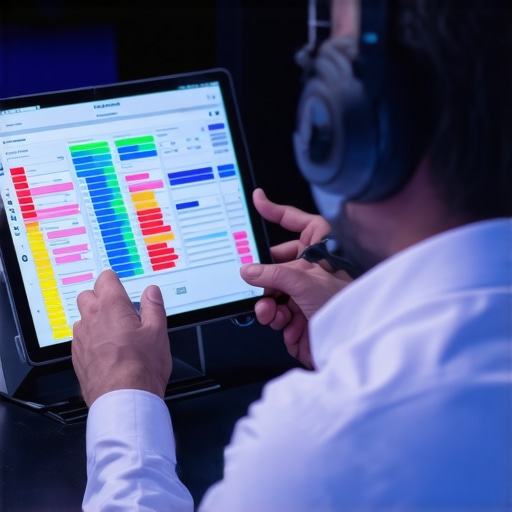
How do I maintain production standards across multiple events?
Consistency is born in the debrief. After every gala, I host a ‘Hot Wash’—a 15-minute meeting while the adrenaline is still high. We talk about where the best corporate event servers for 2025 felt friction. Did the kitchen struggle with keeping mini sliders juicy on a buffet line? Did the floor plan feel cramped? Often, the solution is as simple as realizing why your event floor plan needs wider aisles for staff flow. I predict that within the next three years, we’ll see AI integration in these scripts that predicts service delays based on kitchen sensor data. Until then, you have to be the human algorithm. If you want to level up tomorrow, I challenge you to do this: Rent a professional 4-pack of headsets for your next event and assign one to your lead server. The shift in quiet, calm efficiency will blow your mind.
Hard Truths from a Decade of Dead Microphones
After years in the trenches, I have realized that the biggest myth in our industry is that “good enough” service will save a poorly timed event. It won’t. I used to think I was being efficient by multitasking, but I learned that you cannot watch the kitchen and the stage at the same time. One of the most vital effective catering strategies for corporate event impressiveness is simply knowing when to stay out of the spotlight and let your technical team lead. I also discovered that the logic of serving soup at a high-end corporate gala is as much about the timing of the speech as it is about the temperature of the bowl. If you do not coordinate the two, one will always suffer.
Gear and Guidance I Never Leave Behind
When colleagues ask how I keep 500-person events running like clockwork, I point to my specific toolkit. First, I never start a project without an essential checklist for successful corporate event catering that includes a full technical walk-through. For software, I rely on digital Run of Show tools to keep my AV and catering teams synced in real-time. I also highly recommend studying the spatial psychology research from the Cornell School of Hotel Administration—it completely changed how I think about floor plans and networking flow. Finally, a high-quality headset system like Clear-Com is non-negotiable; it is the nervous system of your production.
Claim Your Power as an Event Architect
Transitioning from a planner to a producer is a mental shift that requires confidence and a relentless focus on the guest experience. It is about realizing that every light cue and every plate cleared is a building block of your brand’s reputation. As you refine your corporate event catering strategies for success, remember that you are the architect of a moment that will never happen exactly the same way again. Don’t be afraid to take control of the room—your guests will thank you for the seamless experience. Have you ever had a transition between speakers go awkwardly long, and how did you fix it? Let me know in the comments.