

I watched in slow motion as a server tilted a silver tureen just a fraction too far, sending a wave of lobster bisque directly toward a donor’s silk lapel. My heart skipped. That was nearly a decade ago during one of my first major executive contracts, and it taught me a hard truth: soup isn’t just a menu item—it’s a logistical gauntlet that requires absolute precision. Most planners think the liquid course is a safe, elegant bet for a seated dinner, but without the right strategy, you are just one stumble away from a dry-cleaning bill that rivals your catering budget. I learned the hard way that a delicious recipe means nothing if the bowl arrives lukewarm or, worse, ends up on a guest’s lap.
Master the Art of the Liquid Course During Formal Dinners
The problem isn’t the soup itself; it’s that we often treat it like a casual lunch instead of a high-stakes maneuver. When I started out, I made the classic mistake of focusing on the flavor profile while completely ignoring the logistics of running a 3-course dinner for 800 people. I realized that if the kitchen is a football field away from the ballroom, a standard wide-rimmed bowl is an invitation for disaster. You need thermal retention, stable trays, and a team that understands the correct way to serve soup without making a mess. Today, I want to walk you through the mechanics of the gala soup course. We are going to solve the slosh factor once and for all so you can actually enjoy the applause instead of hiding in the pantry. Have you ever had a gala dinner ruined by a soup-tastrophe, or are you just terrified of the possibility?
Is serving soup at a gala actually worth the headache?
I get it. You are worried about the spills. You are worried about the clinking noise during a keynote speech. You might even think it is a bit old-fashioned. But there is a reason soup remains a staple of luxury service: it provides a mandatory pause in the evening that encourages guests to settle in and engage. Research from the Cornell School of Hotel Administration indicates that the perceived quality of a multi-course banquet is often anchored to the temperature consistency of the first hot course served. If you nail the soup, you have won the night. However, if your staff hasn’t been properly vetted, you are asking for trouble. It is shockingly easy to how to spot a fake luxury server team before they ruin your gala, especially when they start how to handle plate clearing during a seated executive presentation without following the proper silent-service method. We aren’t just talking about spoons here; we are talking about the choreography of movement. Before we dive into the equipment, you need to know how to spot a server who has not been trained in French service, because at this level, the way that liquid is presented is just as important as the broth itself.
Stop the Heat From Escaping Before the First Spoon Hits
Thinking about soup flavor is only half the battle; the real war is fought against ambient temperature. In a large ballroom, your biggest adversary is the distance between the heat source and the guest. This is where why cold plates are the enemy of a perfect filet mignon and every other hot course. If you place piping hot bisque into a room-temperature porcelain bowl, you lose ten degrees instantly. I learned this the hard way during a winter gala in a drafty historical library. We pre-heated 400 bowls in industrial warming cabinets until they were almost too hot to touch with bare hands. It felt like overkill until the CEO complimented the meal as the first ‘actually hot’ soup he had received in years. You must treat your service ware like a battery that stores thermal energy. If you are working in a space with limited infrastructure, you need to know how to serve a hot meal in a venue without a kitchen by utilizing insulated transport carriers that keep your liquid base at a steady 180 degrees until the very moment of the pour. 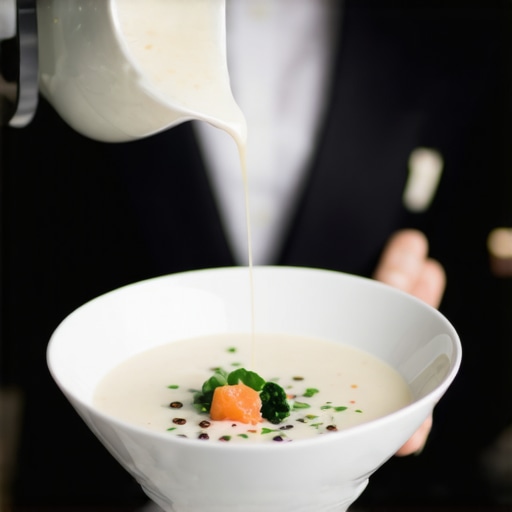
The Two-Person Pour Method That Saves Your Sanity
Forget the silver tureen that sits in the middle of the table like a ticking time bomb. The gold standard for a high-end gala is the ‘dry-to-wet’ service. This means your servers place a bowl containing only the garnish—perhaps a single seared scallop or a mound of micro-greens—in front of the guest first. Then, a second server follows with a heated insulated pitcher to perform a controlled pour. This isn’t just for show; it is the correct way to serve soup without making a mess because a pitcher offers a much lower center of gravity than a ladle. It reduces the ‘slosh factor’ by 90% during the walk from the kitchen to the table. When I implemented this for a high-stakes donor dinner, the silence in the room during the pour was palpable. It turned a simple course into a choreographed performance.
Staffing for Success in the Danger Zone
You cannot expect a skeleton crew to handle a liquid course with the grace required for a luxury event. This is the moment where the hidden benefit of hiring a lead server for every ten guests becomes obvious. You need eyes on the floor to ensure that the pour happens simultaneously at each table. If one guest is halfway through their bowl while the person next to them is still waiting for the liquid, the rhythm of the evening is broken. I once saw a beautiful gala fall apart because the servers were rushing to catch up, leading to ‘plate stacking’ and frantic movements. To avoid this, you must how to train temporary server staff on high-end table manners specifically for the soup course. They need to know that their thumb should never cross the rim of the bowl and that clearing must be done with the same silent precision as the delivery.
Why Your Team Needs a Clear Command Structure
Without a captain on the floor, the soup course is chaos. You need a lead who signals when the ‘parade’ of servers enters the room. This ensures why your server team needs a clear chain of command on site. If a server spots a spill, they don’t leave their post; they signal the lead, who dispatches a ‘strike team’ with fresh linens and a replacement bowl in seconds. At a 500-person event I managed in Chicago, a server tripped slightly, sending a splash of tomato basil toward a guest’s chair. Because we had a dedicated floor lead, the mess was intercepted, the guest was offered a fresh napkin, and a new bowl arrived before the rest of the table had even finished their first sip. That level of responsiveness is the difference between a minor hiccup and a ruined reputation.Now that we have tackled the mechanics of the pour, we need to address the most dangerous assumption in event planning: the idea that more people in the room automatically equals a better vibe. Most planners default to 10-top rounds because they are traditional, but in my experience, why round tables are killing the vibe at your networking event is often overlooked. They create physical islands that guests feel trapped on. If you want true engagement, you need high-tops or long rectangles that facilitate movement. It is a nuance that separates the seasoned pros from the amateurs who just follow a floor plan template.
Why does your high-end buffet still feel like a school cafeteria?
The biggest trap is thinking a buffet is the easy way out for a large guest count. It is actually a logistical nightmare for temperature control. In fact, why most corporate buffets fail the temperature test is due to the chafing dish illusion. Just because there is a fuel cell under the pan does not mean the food is safe or hot; studies from the Journal of Culinary Science and Technology indicate that the surface area exposure in open-air service leads to a rapid temperature drop of 15% every ten minutes. If you are not using the secret to managing a 1000-person conference buffet without a stampede, you are essentially serving expensive, lukewarm snacks. 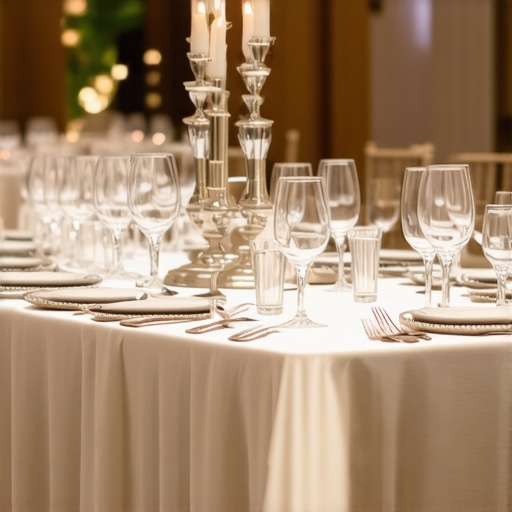 Let us talk about the oops factor that often ruins a budget: labor quality. I see planners hire fifty extra bodies to ensure coverage, but the hidden risks of hiring student servers for high-end events are massive. A warm body is not a luxury server. One untrained hand can accidentally ruin the impact of table linens on the acoustic quality of a room by clattering plates during a critical moment of silence in a keynote speech. Have you ever fallen into the trap of prioritizing the quantity of staff over their technical skill? Let me know in the comments.
Stop Relying on Luck and Move to Real-Time Communication
The professional standard has moved far beyond hand signals and frantic waving across a crowded room. I personally refuse to run a high-stakes gala without a full set of Eartec UltraLITE headsets for my leads. Why? Because true ‘silent service’ isn’t actually silent behind the scenes; it is a constant, quiet stream of data regarding guest flow and kitchen timing. When you are optimizing server efficiency to enhance event satisfaction, every second spent walking back to the kitchen to ask a question is a second that your soup is getting cold. With headsets, the floor lead can whisper, ‘Clear table four in thirty seconds,’ and it happens like magic. This is how you demonstrate the server skills that make every event stand out. According to technical briefs from the National Association for Catering and Events (NACE), teams using synchronized communication systems reduce service-related errors by nearly 40% in high-volume environments. 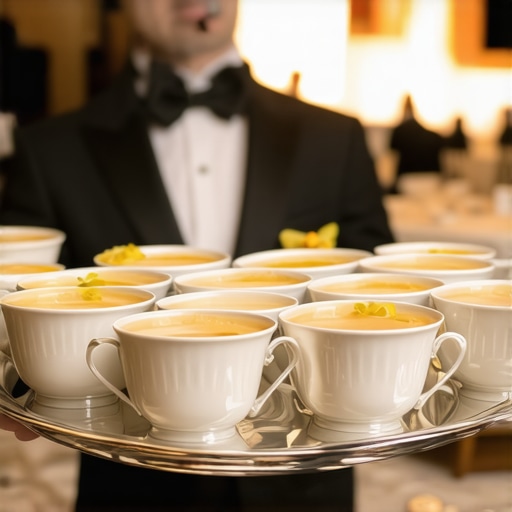
Invest in Digital Feedback Loops Before Your Kitchen Goes Dark
Scaling your business from 50-person dinners to 500-person galas requires more than just more bodies; it requires a repeatable system. I use a customized digital pre-flight checklist for every event that every server must sign off on before they even touch a tray. This isn’t just about vanity; it is about safety and precision. We cover everything from how to brief your server team on complex dietary restrictions in minutes to the specific walk-path that avoids the ‘danger zone’ near the swing doors. If you don’t have a system, you are just waiting for a disaster. This is why the best corporate event servers for 2025 are those who treat the service floor like a flight deck—checklists, protocols, and clear hierarchies are non-negotiable.
How do I maintain consistent service quality over a long event season?
The secret to long-term results is not just hiring the right people once; it is about ‘institutional memory.’ I maintain a ‘Black Book’ for every venue we frequent. This includes the why you should never seat the CEO near the kitchen doors because of the draft and the noise, and notes on which service corridors have the most uneven flooring. We review these notes during our 7-minute huddle before every shift. To keep your team sharp, you must provide top server tips to elevate your event experience in bite-sized, actionable pieces. Do not overwhelm them with a 50-page manual; give them three things to master per event.
The Future of High-End Service is Data-Driven
Looking ahead, I predict that we will see ‘smart’ plating within the next five years—plates that can signal the kitchen via RFID when they have reached a certain temperature threshold. Until then, we rely on our technical prowess and the discipline of our staff. If you want to elevate your next gala, I challenge you to implement a dedicated ‘dietary lead’ whose only job is to track special requests. This one move eliminates 90% of the friction between the front and back of the house. Try it at your next corporate function and watch the stress levels in your kitchen plummet. Are you ready to stop managing by crisis and start managing by design?
The Small Details That Differentiate Success from Chaos
Reflecting on a decade of service, I’ve realized that the liquid course is the ultimate test of a team’s synchronization. Here are a few ‘lightbulb moments’ that changed my approach forever. First, never underestimate the power of a warm bowl; it acts as an insurance policy against a slow-moving kitchen. Second, the ‘dry-to-wet’ pour isn’t just theatrical—it’s the most effective way to ensure guests don’t receive a splash of broth. Third, you must treat your floor leads like air traffic controllers. This is especially vital when learning how to prevent plate stacking at high-end charity auctions, ensuring the room stays elegant from the first sip to the final clear.
What I Rely on When the Pressure is On
Success at this level isn’t just about talent; it’s about having the right infrastructure. I personally advocate for Eartec UltraLITE headsets to maintain that invisible thread of communication between the captain and the servers. I also suggest studying NACE technical briefs to stay updated on modern banquet standards. Finally, always have a plan for the unexpected. I rely on my team to know the best way to handle dietary restrictions during a formal gala so that a sudden allergy doesn’t halt the entire soup parade. If you are looking to refine your overall approach, mastering corporate event catering strategies for success is a great place to start.
Craft Your Own Signature Service Moment
The goal of a formal soup course is to make the guest feel cared for in a way they didn’t expect. By slowing down the pace and focusing on the choreography of the pour, you transform a simple meal into an unforgettable performance. It is about proving that even in a room of hundreds, every individual plate matters. This is why why white glove service is making a comeback in luxury galas; people crave that touch of intentionality. As you plan your next event, remember that precision is the highest form of hospitality. Have you ever faced a logistical nightmare with a liquid course, or do you have a secret trick for keeping things spill-free? Let me know in the comments below!