

I’ll never forget the sound of four hundred forks hitting porcelain in absolute silence because the planner I’d hired—who was brilliant at weddings—didn’t realize the CEO was still in the green room during the grand transition. It was excruciating. I’ve seen enough events go sideways to tell you this: a gala is not a wedding on steroids; it’s a live television production without the benefit of a commercial break. When I first started out, I made the mistake of thinking that if someone could coordinate a 200-person ceremony, they could handle a high-stakes fundraiser. I was wrong. The logistics are entirely different, especially when you are mastering corporate event catering logistics alongside a complex AV script. Today, we are going to look at why you need a person in a headset, not a person with a boutonnière, to run your show.
Stop Treating Your Gala Like a Grand Reception
For years, I watched organizations pour money into floral arrangements and high-end menus while completely ignoring the show flow. A wedding planner is an expert at emotion and aesthetics, but a gala lives and dies by its technical timing. You need someone who understands that your corporate stage needs a professional lighting designer and a cue-caller who knows exactly when to dim the house lights. I remember one specific fundraiser where the day-of coordinator tried to manage the kitchen and the teleprompter at the same time. Guess what happened? The speaker’s slides got stuck on a Thank You graphic ten minutes before the speech ended. That’s exactly why your venue manager should not be your day-of coordinator either; everyone has a role, and the stage manager’s role is the heartbeat of the room. According to research from Bizzabo, technical failures are cited as the top reason for attendee dissatisfaction at large-scale events.
Do I actually need a technical specialist for a simple fundraiser?
You might be thinking that your board members can handle the stage stuff or that the DJ can just wing it. But have you ever seen a keynote ruined because nobody knew how to keep the kitchen noise from ruining the speech? It is not about being fancy; it is about professionalism. Have you ever been to an event where the transitions felt clunky and awkward? Tell me about your worst event dead air moment in the comments below!
Command the Stage with a Locked-In Run of Show
Moving from a wedding to a corporate gala requires a shift from a ‘timeline’ to a ‘run of show.’ Think of your gala like a live broadcast of Saturday Night Live. There is no room for ‘we will see how it goes.’ Every minute must be accounted for on a spreadsheet that includes lighting cues, audio levels, and catering transitions. If your script says the CEO walks on stage at 7:14 PM, the kitchen needs to have the first course cleared by 7:10 PM. This is where most planners fail; they don’t realize that how to keep the kitchen noise from ruining your keynote speech is a matter of literal seconds. I once managed an event where the catering lead and the AV tech weren’t on the same radio channel. The result? The clatter of four hundred salad plates being stacked drowned out the opening remarks of a Nobel Prize winner. Now, I never run a room without a synchronized clock visible to both the banquet captain and the stage manager. It is about mastering corporate event planning secrets to seamless success by treating every vendor as a member of a single pit crew. 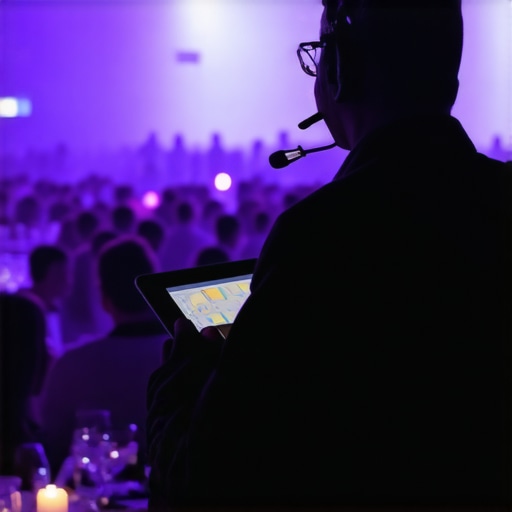
Always Have a Technical Safety Net
You cannot assume the technology will work just because it worked during the soundcheck. For every high-level presentation, you need a redundant system. This is why every CEO keynote needs a teleprompter backup plan, such as physical note cards or a secondary monitor. If the tech glitches, the show must continue without a flicker of panic from the staff.
Assign a Captain for Every Fifty Guests
In a wedding, you might have one head server for the whole room. In a high-end gala, that is a recipe for a bottleneck. You need to segment the room. I recommend why your server team needs a designated captain for every 50 guests to ensure that communication doesn’t break down. I remember a 600-person awards dinner where we ignored this rule. A server dropped a tray of drinks in the back corner, and because there was no ‘chain of command’ in that specific quadrant, it took ten minutes for anyone to notice. During those ten minutes, three tables went without water, and the VIPs in that section started live-tweeting their frustration. That mess is why your server team needs a clear chain of command on-site. When you have localized captains, they can solve problems instantly without running to the back of the house.
Master the Art of Silent Service
The most impressive thing a server can do at a corporate event is be invisible. You need to know how to handle plate clearing during a seated executive presentation without making a sound. This involves training staff to never stack plates at the table and to use ‘the pinch’ method for silverware. When managing the logistics of running a 3-course dinner for 800 people, silence is your most valuable currency. You should also take five minutes before the doors open for a ‘huddle’—this is the best time for how to brief your server team on complex dietary restrictions in minutes so no one is guessing when a vegan guest raises their hand.
Ditch the Round Tables if You Want Real Networking
We often default to the 60-inch round table because it is easy, but why round tables are killing the vibe at your networking event is simple: they create silos. If your goal is networking, consider long communal tables or high-tops. Knowing how to layout a corporate ballroom for maximum networking often means breaking the traditional mold and creating ‘zones’ of movement rather than static seating charts.I often hear planners argue that a buffet is the safest bet because it offers something for everyone. In reality, a buffet is a logistical landmine that trades elegance for a line of people waiting for lukewarm pasta. If you want a high-impact gala, you need a plated, synchronized service. One of the biggest mistakes I see is the assumption that high guest counts require a compromise on food quality. People think serving 500 people means you must offer a choice of protein at the table, but let’s talk about the problem with serving steak at a 500-person business lunch. Unless you have a kitchen the size of a hangar and a small army of trained professionals, that medium-rare filet is going to be a cold, gray disaster by the time it reaches Table 42. It is better to have a perfectly executed, single-choice menu that flows than a variety that causes a twenty-minute delay. This is where corporate event catering strategies for success shift from simple hospitality to high-speed logistics.
The Steak Mistake You are Still Making
Another expert trap is the belief that a server is just a server. I have seen million-dollar fundraisers ruined because the organization tried to save a few hundred dollars by hiring local college students instead of pros. This leads to the hidden risks of hiring student servers for high-end events. A student does not know how to spot a server who has not been trained in French service, and they certainly will not know how to navigate a room without clanking silverware. According to a report by the Cornell School of Hotel Administration, service quality perception accounts for nearly 70% of a guest’s overall satisfaction score, yet it is often the first budget line item to get cut. Have you ever fallen into this trap? Let me know in the comments.
How many servers do I really need for a VIP reception?
It is not a guess; it is math. If you want a room that feels effortless, you need to understand the math behind hiring extra servers for a flowing champagne reception. You need more than just bodies; you need specialists. I always look for server skills that make every event stand out, like the ability to anticipate a guest’s need for a refill before they even look at their glass. When you fail the temperature test—which is why most corporate buffets fail the temperature test—it is usually because the ratio of staff to guests was off, leaving food to sit in the danger zone while a line formed. 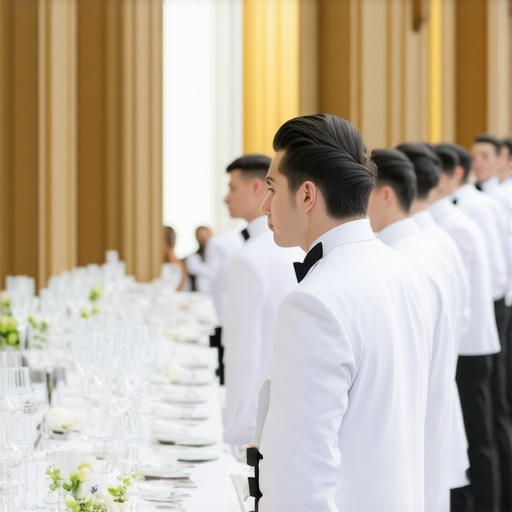
Stop Cutting Corners on Service Training
The hidden nuance of a luxury event is that the staff should feel like an extension of the host’s brand. When you use best corporate event servers for 2025, you are paying for the ability to handle a crisis without a guest ever knowing there was a problem. Whether it is a spilled drink or a last-minute dietary restriction, a professional team manages it with a nod and a smile, keeping the focus on the stage where it belongs.
Ditch the Paper Scraps for Digital Scripts
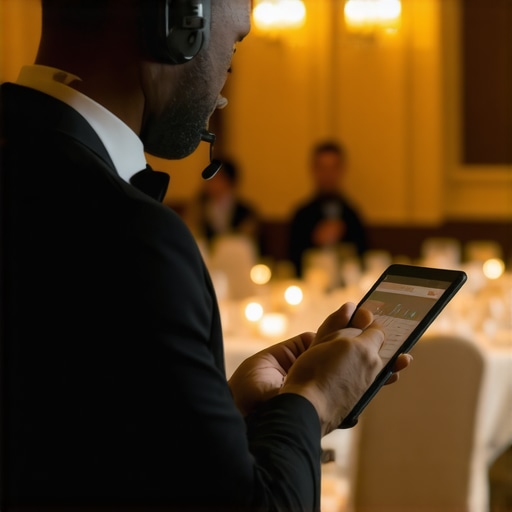
If you are still relying on a printed PDF stapled to a clipboard, you are living dangerously. The real secret to my most successful galas is a real-time, cloud-based show caller software. I personally use platforms like Shoflo because they allow me to change a cue on my tablet and have it instantly reflect on the teleprompter, the lighting board, and the banquet captain’s device. This isn’t just about being tech-forward; it is an essential checklist for successful corporate event catering that ensures no one is working from an outdated version of the truth. When the CEO decides to skip three slides, the kitchen needs to know *now*, not in five minutes when the plates are already being fired. This level of synchronization is what separates a chaotic fundraiser from a professional production.
How do I maintain service standards across multiple cities?
Consistency is the dragon every event planner tries to slay, especially when you are scaling. To keep results high, I developed a ‘Standard Operating Procedure’ (SOP) video library. Instead of a forty-page manual no one reads, I provide thirty-second clips showing exactly top server tips to elevate your event experience. This makes how to train temporary server staff on high-end table manners a visual, repeatable process. According to the Professional Convention Management Association (PCMA) 2024 Trends Report, 68% of event organizers are now prioritizing ‘real-time data orchestration’ to bridge the gap between back-of-house and front-of-house operations. By digitizing the training, you ensure that your top servers for a seamless wedding reception or gala represent your brand perfectly every time.
Why Your Radios Need More Than One Channel
Communication is where the wheels usually fall off during a live event. I see too many teams putting the florist, the caterer, and the AV tech on one single radio channel. It’s a cacophony of ‘Where are the napkins?’ and ‘The mic is hot!’ that distracts everyone. You need a dedicated channel for logistics and a separate one for the stage. This is a core part of effective catering strategies for corporate event impressiveness. If you want to scale, invest in multi-channel digital radios with noise-canceling headsets. It allows your staff to stay focused on the guest, not the chatter in their ear. I also treat every gala like a flight by doing a ‘black box’ review the next morning. We look at the time-stamped logs of when the first plate was served versus the last. This data-driven approach is how you reach the peak of mastering corporate event planning secrets to seamless success. If you aren’t measuring the seconds, you’re just guessing.
Looking at the horizon, the next big shift is ‘predictive hospitality.’ We are moving toward a world where sensor-based tracking will alert the kitchen that a specific table is finishing their entrees, allowing for perfectly timed transitions without a single word being spoken. It sounds like sci-fi, but for best corporate event servers for 2025, it will be the expected standard. For your next event, I challenge you to try a ‘silent radio check’ five minutes before doors—if your team can’t communicate through a single discreet nod or a brief headset cue while optimizing server efficiency to enhance event satisfaction, you aren’t yet ready for the high-stakes world of executive productions.
The Harsh Truths of Transitioning from Weddings to High-Stakes Galas
After years in the trenches, I’ve realized that the biggest mistake is assuming a gala is just a fancy party. It’s actually a live broadcast where the ‘product’ is the message, not the cake. I learned the hard way that silence is more than a courtesy; it is a professional requirement. You have to learn how to prevent plate stacking at high-end charity auctions because even the faintest porcelain clink can snap an audience out of a donation-ready trance. Another lightbulb moment was realizing that ‘white glove’ isn’t just an aesthetic; why white glove service is making a comeback in luxury galas is because it signals to donors that every detail of the organization is handled with precision. Finally, never skip the post-event audit. If you aren’t looking at your logs to see exactly where the service bottleneck occurred, you aren’t growing.
The Toolkit I Use to Manage the Chaos
I don’t leave my success to chance, and neither should you. My essential toolkit starts with Shoflo for real-time script synchronization—it’s the only way to keep the kitchen and the AV booth in perfect harmony. For lighting, I always consult a designer to determine how to choose the right lighting for a high stakes board dinner, as bad shadows can ruin a CEO’s confidence. I also swear by a standardized video training library for staff. Instead of lecturing, I show them short clips of perfect service. Lastly, I recommend the PCMA 2024 Trends Report to anyone serious about the data side of event management. These tools move you from being a ‘planner’ to being a ‘producer.’
Your Path to a Flawless Production
Executing a high-stakes fundraiser or corporate meeting can be intimidating, but when you treat the event like a synchronized machine, the results are transformative. By focusing on technical precision and localized leadership, you ensure that the message of the night is never overshadowed by logistical hiccups. It’s time to move beyond simple hospitality and embrace robust corporate event catering strategies for success to protect your brand and your board’s investment. Go out there and run your next show with the confidence of a seasoned producer. Have you ever had a technical glitch during a live speech that you had to fix on the fly? Tell me your ‘save the day’ story in the comments below!